Red Deer & Central Alberta | Property investment

Can a Rental Property Help Fund Your Retirement?

How current rent, market rent and property growth change the picture
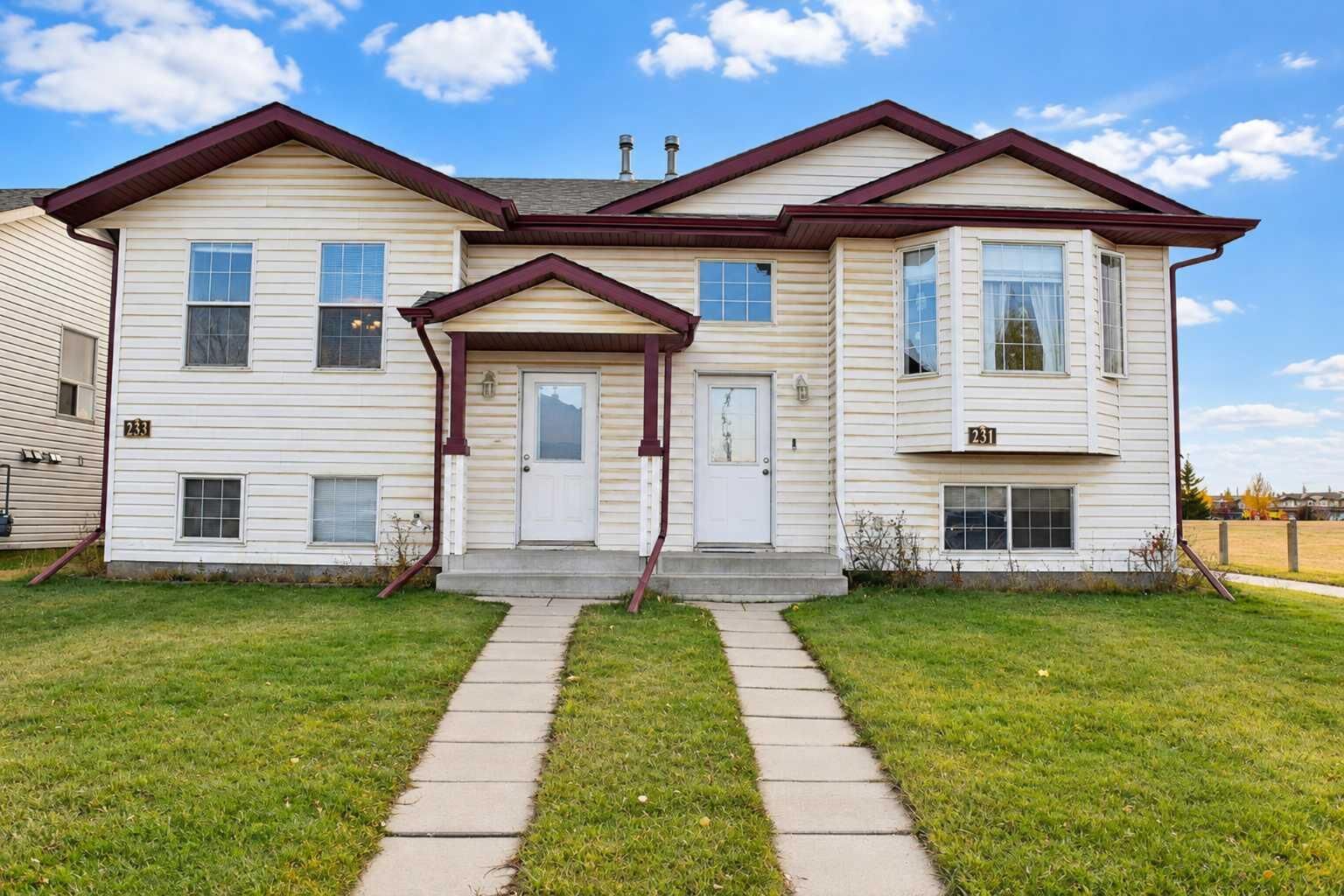
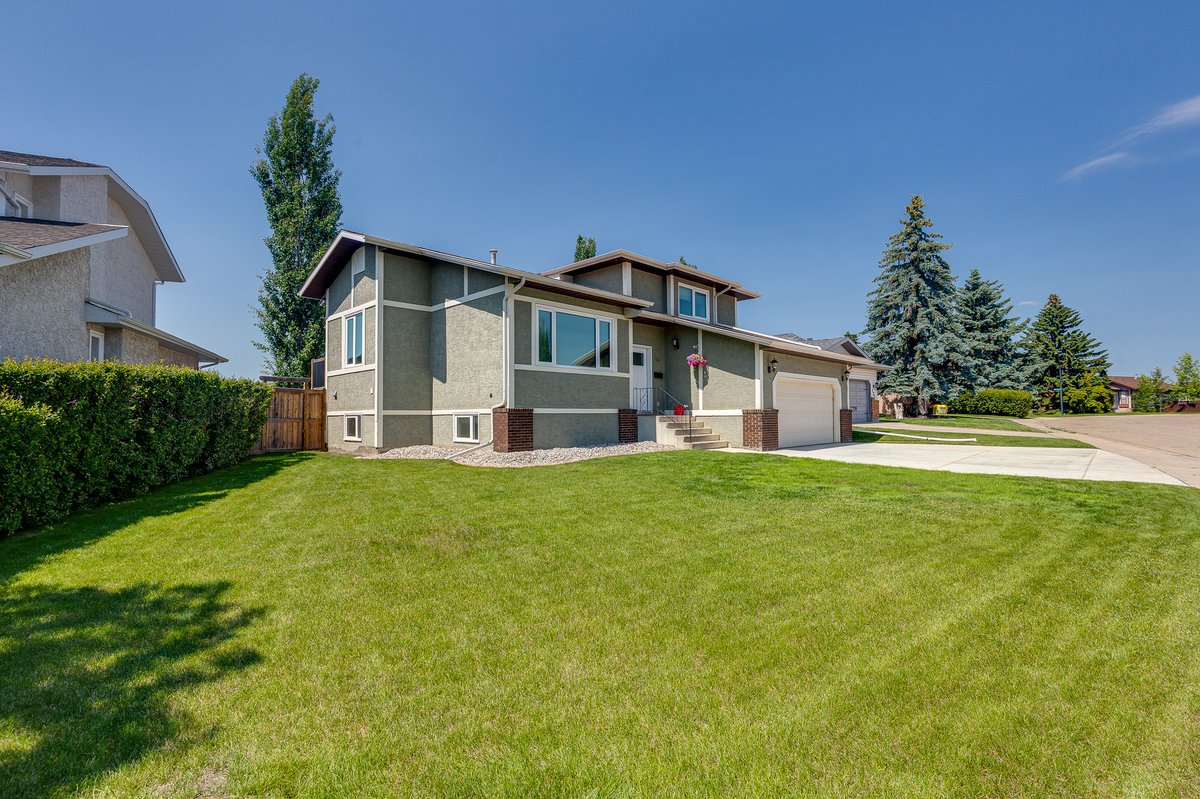
Enhanced exterior photograph of the two separately titled homes at 231 and 233 Kendrew Drive, Red Deer

231 & 233 Kendrew Drive, Red Deer. View the property listing.

Yes. A rental property can help fund retirement through rental income, mortgage repayment and changes in property value. It may provide income as the debt falls, or sale proceeds later. The useful question is what you need to contribute along the way and what you might receive in return.

That is why an investment property deserves more than one calculation. Current rent tells us where the property starts. A supported market-rent assumption helps us examine a different income scenario. Property-value growth changes the equity and potential sale proceeds, but it does not pay this month's mortgage.

231 & 233 Kendrew Drive offer a practical example. These separately titled properties have a combined asking price of $639,800 and advertised rents of $1,500 per side, or $3,000 monthly. Existing leases extend into 2027, so a higher-rent scenario is not a claim that a buyer can immediately replace those rents.

Start with two rent levels and two growth assumptions

For this comparison, we use the current advertised rent of $1,500 per side and an illustrative market-rent starting point of $1,900 per side. The higher figure is a scenario informed by advertised comparables, not a confirmed achievable rent or a rent increase for the existing tenants. Condition, layout, utilities, parking and lease terms all matter.

We then apply 2% and 3% annual rent growth to each starting point. These are four separate paths. Year 1 means the first year of that hypothetical rent level, not a dated forecast of the existing leases. Growth starts in Year 2; the timing of any actual change must be assessed separately.

All four paths use the same financing: 25% down, a hypothetical 5% mortgage rate and a 25-year amortization. The payment is approximately $2,791 monthly. Property taxes and insurance rise by 2% annually in every case. Vacancy, management, maintenance and capital allowances remain in the calculation and their dollar amounts follow rent.

Average monthly cash flow under four rent pathsFour rent paths with the same loan and cost assumptions. Exact Year 1, 10 and 20 values are in the table.−$1,500−$1,000−$500$0$500$1,000$1,50015101520Scenario year
Current $1,500 / side + 2%Current $1,500 / side + 3%Market $1,900 / side + 2%Market $1,900 / side + 3%
Illustrative, not a forecast. On small screens, swipe the chart sideways. Values are also provided in the table.
Average monthly cash flow after modeled costs and mortgage
Starting rent / annual rent growthYear 1Year 10Year 20
Current $1,500 / side + 2%−$1,138−$816−$383
Current $1,500 / side + 3%−$1,138−$561+$306
Market $1,900 / side + 2%−$519−$76+$519
Market $1,900 / side + 3%−$519+$247+$1,391

Market rent is hypothetical. Negative figures are owner contributions. Monthly amounts are annual cash flow ÷ 12, rounded to the nearest dollar. The annual Year 20 results are −$4,600, +$3,667, +$6,225 and +$16,696 respectively.

At the current starting rent with 2% annual growth, the model still needs about $383 a month from the owner in Year 20. At a $1,900 starting rent with the same 2% growth, it instead produces about $519 a month. Using 3% rent growth raises that hypothetical market-rent result to about $1,391 a month.

Those changes are meaningful. The point is to test supported alternatives, not assume the highest rent or growth rate will occur.

Then test three property-value paths

Rent growth and property-value growth are separate assumptions. We test flat prices, 2% annual value growth, and a historical-growth reference of approximately 2.2%.

The historical reference uses the property's documented 2015 transaction basis and the midpoint of a September 2026 working valuation range. It is an estimated price-growth rate, not a realized investment return, a new appraisal or a forecast. It has not been adjusted for improvements made during ownership. Here, the historical reference is close to the 2% scenario, so those two projections are similar.

For consistency, the forward examples start from the $639,800 asking price. That is an illustrative purchase and initial-value assumption, not a guarantee of market value. Each rent path is paired with each value path, giving 12 combinations rather than one preferred answer.

Three modeled property-value pathsFlat prices, 2% growth and a historical proxy of 2.23%, all starting at $639,800.$600k$700k$800k$900k$1,000k05101520Scenario year
Flat prices2% value growthHistorical proxy: 2.23%
Illustrative, not a forecast. On small screens, swipe the chart sideways. Values are also provided in the table.
Modeled property value, not profit
Annual property-value growthYear 10Year 20
Flat / 0%$639,800$639,800
2%$779,913$950,709
Historical proxy / 2.23%$797,579$994,267

Even with flat prices, mortgage repayment builds equity. The modeled loan falls from $479,850 to about $354,111 after 10 years and $148,072 after 20, assuming the same rate throughout. Appreciation, when it occurs, adds to that equity. It can also be negative; flat prices are not a worst-case scenario.

$479,850Starting mortgage
$354,111Mortgage after 10 years
$148,072Mortgage after 20 years

Count the contributions before calling it profit

Gross equity is the property's value less the remaining mortgage. It includes your down payment and is not all profit. Selling costs and every later cash contribution must also be counted.

For example, with 2% annual rent growth and 2% annual value growth, the current-rent case produces an estimated pre-tax sale profit of about $96,000 after 10 years and $394,000 after 20. Starting instead at the hypothetical $1,900-per-side rent raises those estimates to about $178,000 and $575,000.

Those figures include modeled purchase and sale costs, mortgage repayment and operating cash flows. They do not count principal repayment twice, and positive cash distributions are not assumed to earn an additional return. The accompanying comparison shows all 12 outcomes, owner contributions and annualized returns.

See all 12 modeled sale-return comparisons

Current starts at $1,500 per side; market starts at a hypothetical $1,900. Each sale horizon is a separate holding-period example. Profit is after all modeled contributions and costs, before tax.

Rent / growthValue growth10-year profit / IRR20-year profit / IRR
Current / 2%Flat−$36,803
-1.72% IRR
$99,033
1.56% IRR
Current / 2%2%$96,304
3.62% IRR
$394,397
4.69% IRR
Current / 2%Hist. 2.23%$113,087
4.15% IRR
$435,777
5.02% IRR
Current / 3%Flat−$22,476
-1.04% IRR
$170,727
2.62% IRR
Current / 3%2%$110,631
4.13% IRR
$466,091
5.45% IRR
Current / 3%Hist. 2.23%$127,414
4.65% IRR
$507,471
5.76% IRR
Market / 2%Flat$44,558
2.10% IRR
$279,572
4.52% IRR
Market / 2%2%$177,665
6.77% IRR
$574,936
7.09% IRR
Market / 2%Hist. 2.23%$194,448
7.25% IRR
$616,316
7.38% IRR
Market / 3%Flat$62,705
2.91% IRR
$370,385
5.78% IRR
Market / 3%2%$195,812
7.40% IRR
$665,749
8.05% IRR
Market / 3%Hist. 2.23%$212,595
7.86% IRR
$707,128
8.30% IRR

Annual IRR is a money-weighted return using initial cash at Year 0, operating cash at each year end and sale proceeds at the final year end. Positive cash distributions are not reinvested. These estimates exclude income and disposal taxes.

Annual cash flow is another measure. A year's mortgage principal repayment and change in property value may increase wealth, but neither is spendable rental income. We keep those components separate rather than describing all of them as annual cash profit.

Choose the role before choosing the property

Are you looking for income today, equity during your working years, or potential retirement income later? The answer affects the purchase price, financing and cash commitment that fit your plan.

The 25%-down example is not immediately cash-flow positive at either starting rent used here. A shorter amortization requires more money initially but can clear the mortgage sooner. More down payment also changes cash flow, while tying up more capital. No one structure is automatically the best choice.
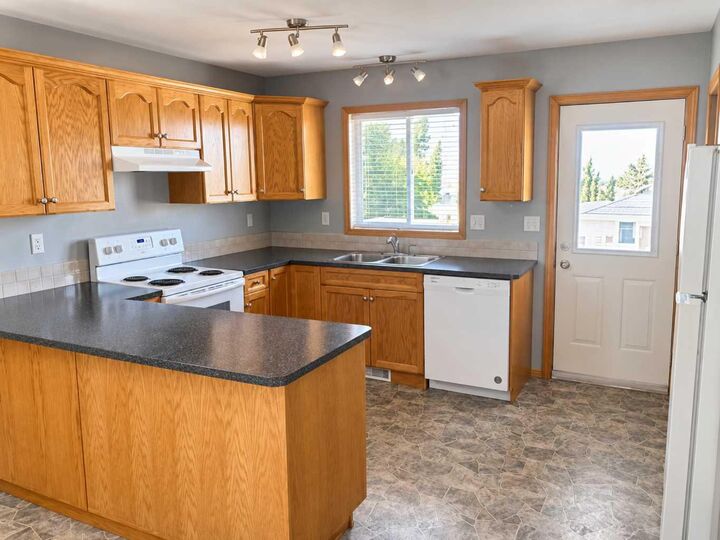
Kitchen in the Kendrew Drive property, with wood cabinets and a peninsula counter
Property condition, maintenance and the actual rent roll belong in the investment review.

5101 50 Avenue: a different investment conversation

Our downtown listing at 5101 50 Avenue / 4940 51 Street combines commercial and residential space and is offered at $389,900, as is and subject to existing tenancies. Its rent roll, collections, operating costs, vacant space and building condition need their own review. A lower asking price alone does not establish a better return.

Start with information you can check

Review the leases, confirm collections, obtain financing and insurance quotes, and assess maintenance and capital needs. Then test vacancy, repairs and renewal rates before deciding whether the required contributions and potential returns fit your retirement plans.

If you are considering your first rental property or adding to a portfolio, let's take a closer look at the property, the assumptions and the numbers behind it.

Patrick Galesloot
Broker/Owner | CENTURY 21 Advantage
Call 403-357-9142 Email Patrick

About the examples

All figures are illustrative, in Canadian dollars, nominal and before tax. The base model uses 25% down, 5% nominal mortgage interest with semiannual compounding and monthly payments over 25 years, annual property taxes of $5,033 and estimated insurance of $3,000. Vacancy is 5% of gross rent; management is 8% of collected rent; maintenance and capital allowances are each 5% of gross rent. Capital allowances are treated as spent, not returned on sale. Purchase costs are estimated at 2% and sale costs at 5%. The mortgage rate stays constant only for modeling, not as a prediction of renewal rates. Taxes on income and disposal, extraordinary costs, investor time and inflation are not modeled. Actual rents, costs, financing and values may differ. The comparisons do not establish that an existing tenancy can be repriced or that a particular rent will be achieved.

Asking-rent examples reviewed October 21, 2026: 259 Kendrew Drive ($1,900 plus utilities; availability not independently confirmed), Kyte Crescent Townhomes (from $1,839) and Kitson Close Townhomes (from $1,989). Manager prices are net of advertised incentives on a 12-month lease, with parking extra. These are asking advertisements, not completed rental transactions, and the properties are not identical.

Historical price-growth method: combined documented 2015 transaction basis to the $625,000 midpoint of a September 28, 2026 working value range of $620,000–$630,000, subject to walkthrough. Using the July 8, 2015 transfer-registration date gives 2.2287% annual nominal price growth, rounded to 2.23% in the tables. It is not adjusted for improvements and is not an investment return or forecast.
Red Deer Real Estate Market Update

What the September 2026 Red Deer Real Estate Market Is Telling Us

Red Deer continues to be a relatively tight housing market heading into fall, but the numbers tell a more useful story when we look beyond average price alone. Inventory, sales activity, absorption and what homes are actually selling for compared with asking price all help show where buyers and sellers stand today.

September 2026 Market Overview

Red Deer Remains Active, With Limited Inventory Relative to Sales

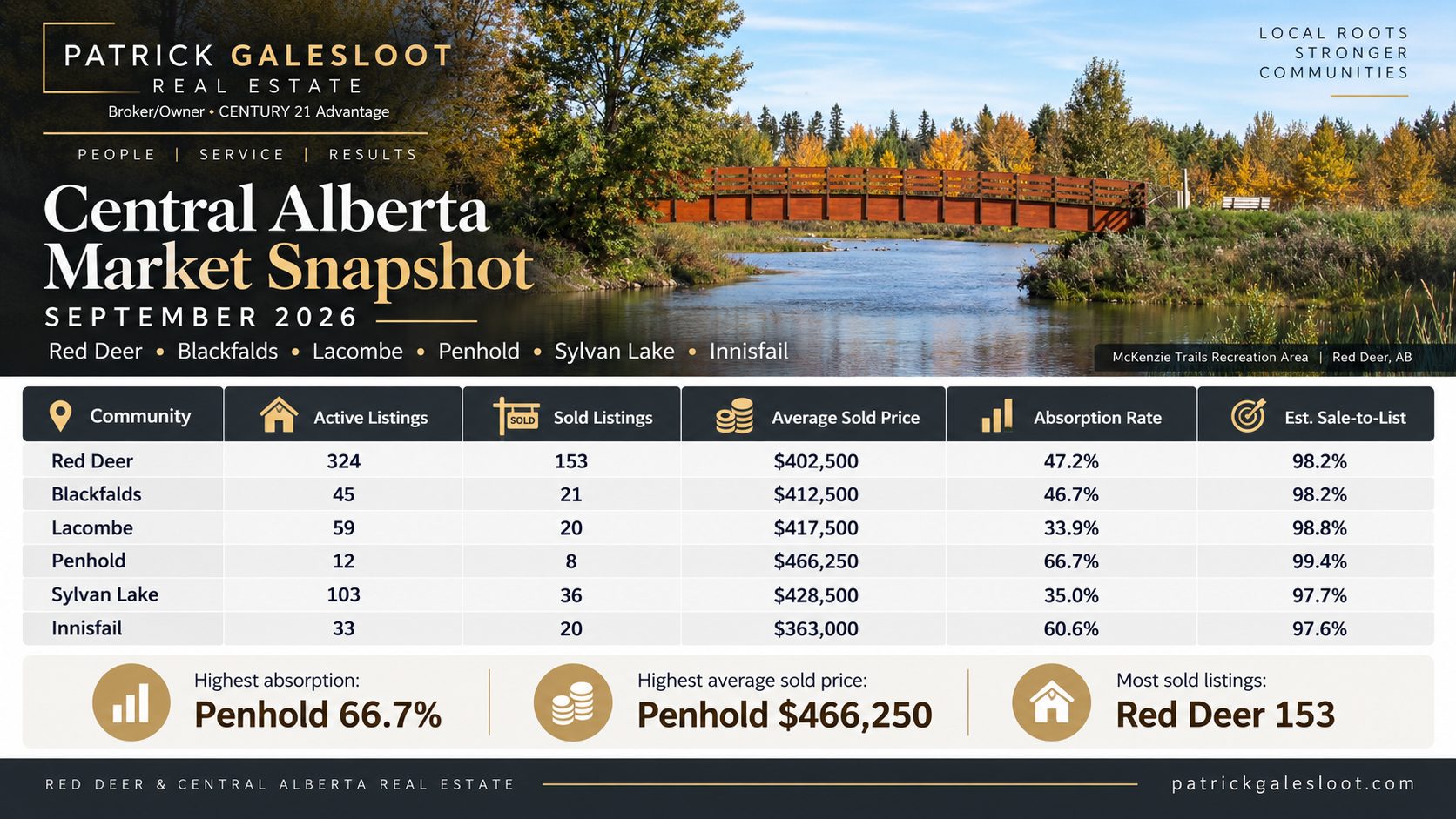
The September market snapshot shows 324 active listings in Red Deer compared with 153 sold listings. That relationship between available inventory and completed sales continues to put Red Deer on the tighter side of the market.

Red Deer's average sold price in the current comparison is $402,500, with an absorption rate of 47.2% and an estimated sale-to-list ratio of approximately 98.2%.

Those numbers matter because they describe more than simply whether prices are up or down. They help us understand how much selection buyers have, how quickly the market is absorbing available homes and how closely sellers are ultimately getting to their asking prices.

Red Deer real estate market September 2026 statistics including active listings sold listings average price and absorption rate
My read on the market: Red Deer is still rewarding homes that are positioned properly. Buyers have choices, but inventory is not high enough to give them unlimited leverage. Sellers still need to get price, condition and presentation right from the start.
Central Alberta Home Prices

How Red Deer Home Prices Compare With Nearby Communities

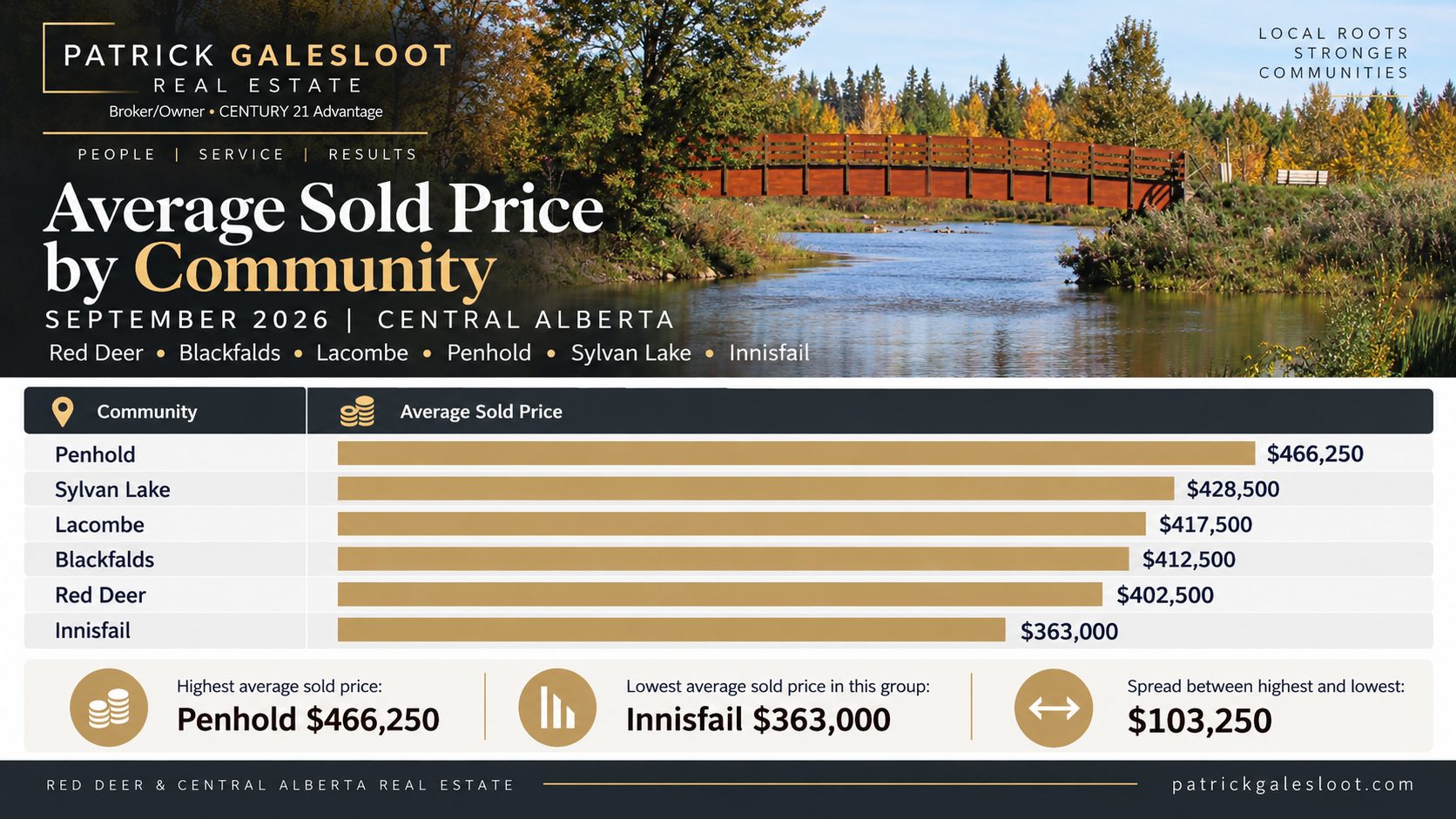
Red Deer is not an isolated real estate market. Buyers frequently compare homes in Red Deer with Blackfalds, Lacombe, Penhold, Sylvan Lake and Innisfail, particularly when location, commute and property type are flexible.

In this September comparison, Penhold recorded the highest average sold price at $466,250. Sylvan Lake followed at $428,500, Lacombe at $417,500, Blackfalds at $412,500, Red Deer at $402,500 and Innisfail at $363,000.

Average home sold price Red Deer Blackfalds Lacombe Penhold Sylvan Lake and Innisfail September 2026

Average price is useful, but it needs context. A community with several higher-end detached homes selling in one month can see its average jump substantially. The same is true in reverse when more entry-level homes, townhomes or condominiums make up the sales mix.

That is why I would never recommend pricing a Red Deer home simply by looking at the overall city average. The right comparison is much narrower: neighbourhood, property type, size, age, condition, recent comparable sales and the competition buyers can choose from right now.

Supply & Demand

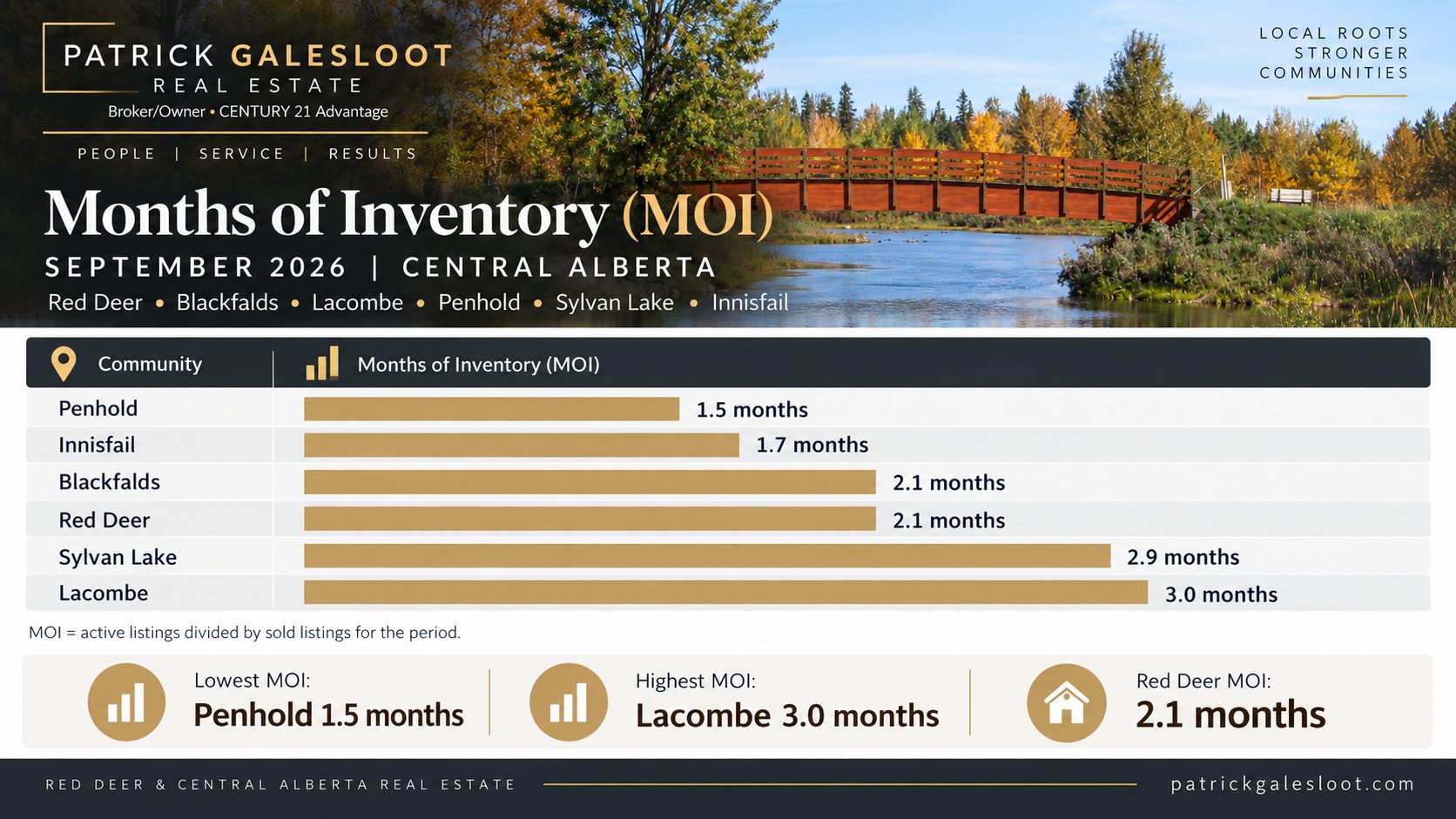
Red Deer Has About 2.1 Months of Inventory

Months of Inventory is one of the indicators I find most useful when explaining market conditions to clients. It estimates how long it would take to sell the available inventory at the current pace of sales if no new listings came onto the market.

Red Deer currently sits at approximately 2.1 months of inventory. Blackfalds is at a similar level, while Penhold is tighter at approximately 1.5 months and Innisfail is around 1.7 months.

Sylvan Lake and Lacombe have more supply relative to sales, at approximately 2.9 and 3.0 months respectively.

Months of inventory Red Deer and Central Alberta real estate market September 2026

What Low Inventory Means for Sellers

Sellers benefit from having fewer competing homes, but low inventory does not mean every property will sell quickly at any price. Buyers still compare value carefully, particularly once a listing has accumulated market time.

What Low Inventory Means for Buyers

Buyers should be prepared when a well-priced home appears. The strongest properties can still attract competition even when the broader market feels calmer than it did earlier in the year.

Pricing & Negotiation

Red Deer Homes Are Selling Close to Asking Price

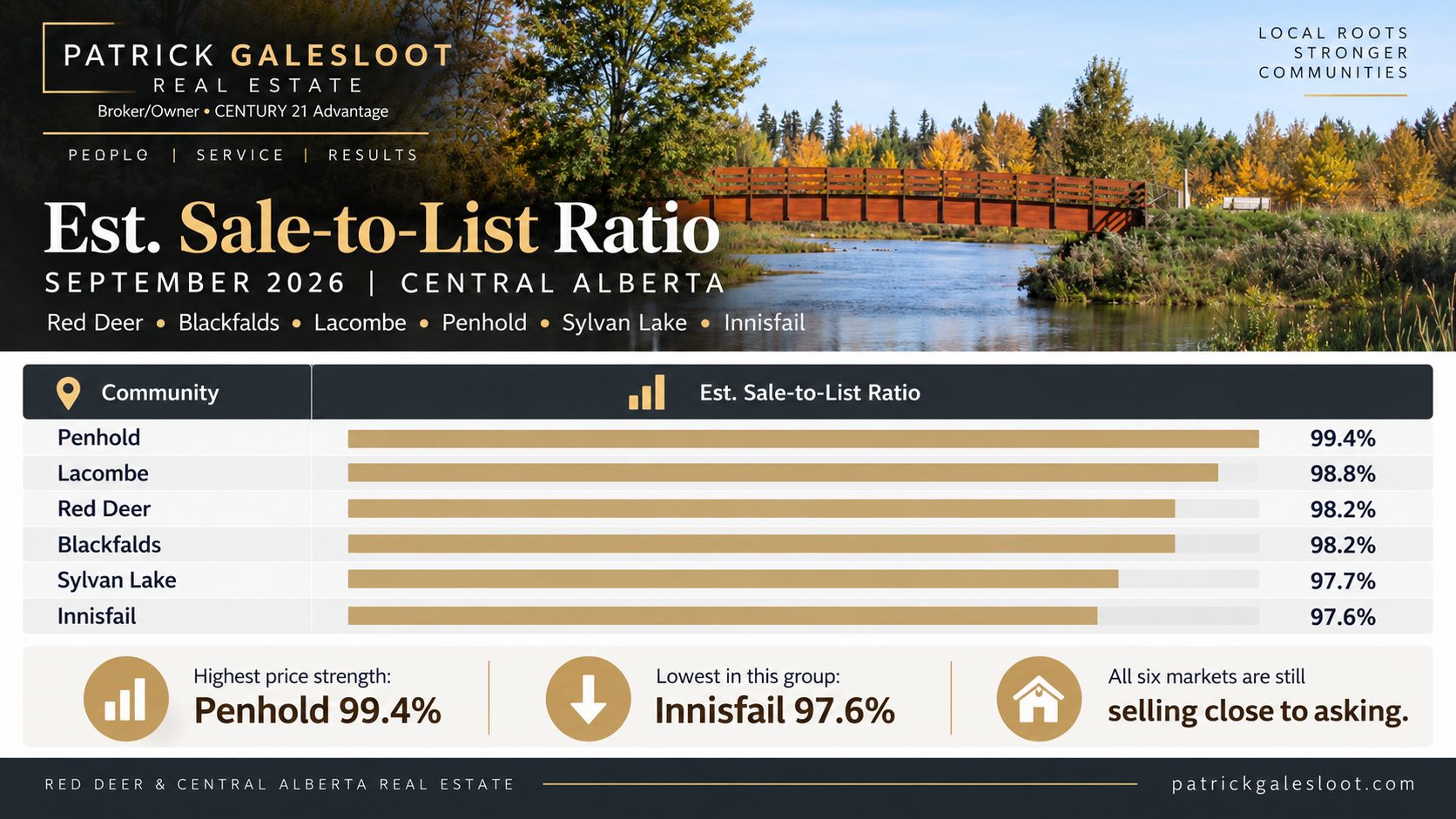
Red Deer's estimated sale-to-list ratio is approximately 98.2%. In simple terms, homes in the current data set are generally selling quite close to the asking price.

The surrounding communities tell a similar story. Penhold is approximately 99.4%, Lacombe 98.8%, Blackfalds 98.2%, Sylvan Lake 97.7% and Innisfail 97.6%.

Sale to list price ratio Red Deer and Central Alberta real estate September 2026

That does not mean buyers should automatically offer 98% of asking price. It means sellers, on average, are not having to give away large discounts to get transactions completed.

Negotiating strategy still depends heavily on the property itself. A new listing priced well can require a very different approach from a home that has been on the market for 60 days, has already reduced its price or is competing with several similar properties.

Looking Beyond the Headline

The Red Deer Market Is Really a Collection of Smaller Markets

The city-wide statistics are valuable, but they are only the first layer. Conditions can vary considerably between Red Deer neighbourhoods and price ranges.

A detached home in Anders, Deer Park, Vanier Woods or Lancaster is not necessarily competing with the same buyer pool as a condominium downtown, an older bungalow in Morrisroe or a newer home in Timber Ridge.

The same is true by price range. Inventory may be tight below one price point and noticeably more competitive for sellers at another. That is why I am increasingly looking at market indicators such as price reductions, inventory age, pending sales, absorption by price range and neighbourhood-level activity rather than relying on one city-wide average.

If you are researching a specific part of the city, you can also explore my Red Deer neighbourhood guides for more information about individual communities.

324 Active Red Deer listings in this market snapshot
2.1 Approximate months of inventory in Red Deer
98.2% Estimated Red Deer sale-to-list ratio
Selling a Home in Red Deer

What September's Market Means for Red Deer Sellers

For sellers, the current market still provides a favourable backdrop — but the advantage comes from being one of the homes buyers see as good value.

The first couple of weeks on the market remain important. That is when a listing receives the most attention from buyers who have already been watching the market. Starting too high can use up that initial exposure and eventually force the seller to chase the market with price reductions.

I would rather position a property properly at the beginning, watch showing activity and buyer feedback carefully and then make decisions based on what the market is actually telling us.

Thinking about selling? City-wide statistics are useful, but the important number is what buyers are currently willing to pay for a property like yours in your neighbourhood.
Buying a Home in Red Deer

Buyers Have Choices — But the Best Properties Can Still Move Quickly

Buyers should not interpret a quieter fall market as an automatic invitation to make aggressive low offers. With Red Deer sitting near 2.1 months of inventory and homes generally selling close to list price, strong properties can still command attention.

The opportunity for buyers is in identifying where the leverage actually is. Market time, competing listings, previous price changes, property condition and seller motivation can all create negotiating opportunities that the overall city statistics cannot show.

That is where current local market information matters more than a generic percentage.

Wondering What the Red Deer Market Means for Your Property?

I have been helping people buy and sell real estate in Red Deer and Central Alberta since 2002. If you are thinking about moving, I can help you look beyond the headline statistics and understand what is happening in your neighbourhood, property type and price range.

What Could Your Home Sell For? Contact Patrick
Market statistics are intended as a general overview of residential real estate activity in Red Deer and selected Central Alberta communities. Average sold prices and other market measures can be affected by the mix and number of properties sold during a particular period. They are not a substitute for a property-specific comparative market analysis.
Selling Your Home

Renovating Before You Sell: What’s Worth Doing — and What Probably Isn’t

Before spending thousands preparing a home for sale, separate the repairs buyers may care about from improvements you may never recover in the selling price.
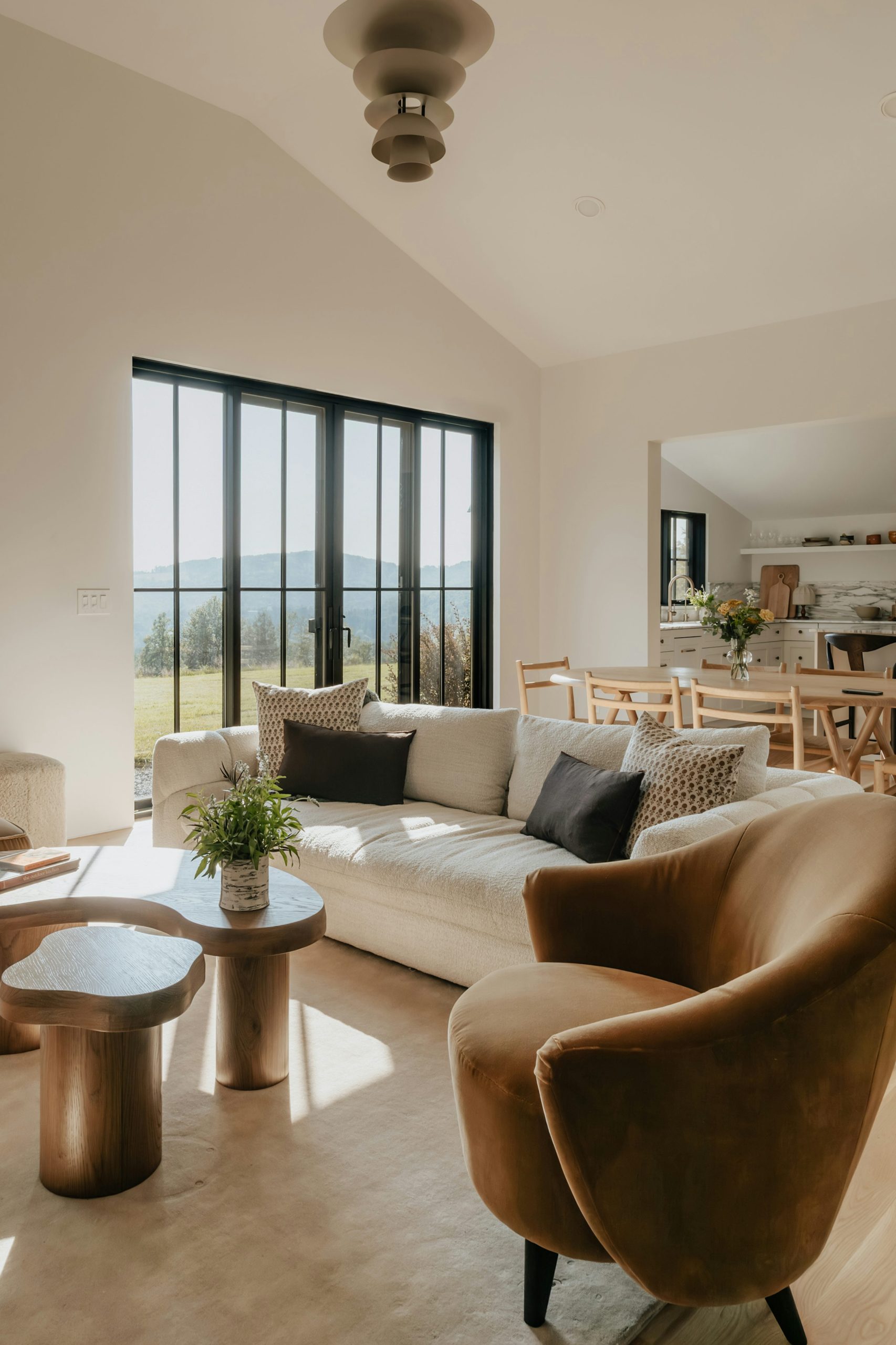
Updated residential interior showing practical home improvements before selling

One of the questions I get fairly often from homeowners preparing to sell is: What should I renovate before I put my house on the market?

My first question is usually what they are thinking of doing. A repair that removes a genuine concern for buyers is a different decision from replacing something simply because the homeowner would prefer a different look.

Some improvements can help a home show better and make the sale easier. Others can use up a renovation budget without adding the same amount to the selling price.

Before spending, I would look at the condition of the home, what buyers are likely to notice and who the renovation is really for.

Where I Would Start

Start with the things buyers can turn into objections

I would start with the furnace, hot-water tank, plumbing, electrical and any known repairs that have been put off.

When something is failing or clearly needs attention, a buyer sees both an expense and a job they will have to organize after moving in.

That concern can become larger than the repair itself. A buyer may mentally allow much more than the actual cost because they are also thinking about the inconvenience and the possibility of finding something else wrong.

Getting a real quote and dealing with a practical repair before listing can help take some of that uncertainty out of the conversation.

This does not mean replacing every older component automatically. Start with what needs repair, what is no longer working properly and what has been postponed. Age, condition and performance all matter.

Exterior Condition

Do not forget about the roof

Shingles are easy to leave out of the conversation because we do not spend much time looking at them. Buyers will notice if they are curling, deteriorating or visibly worn.

A roof that obviously needs work can affect the first impression of the house and become one of the first expenses a buyer adds to their list. As with the mechanical items, the perceived cost and inconvenience can become a bigger negotiation issue than the actual work.

Find out what the problem actually costs

If the roof is a concern, find out what it needs and what that work would cost before deciding how to prepare and price the property. A specific assessment is more useful than either side guessing.

Cosmetic Improvements

Paint and consistent lighting can make a big difference

Paint is one of the first cosmetic improvements I would consider. It can change how a room feels without requiring a major renovation.

A space that feels tired or difficult to picture living in can feel cleaner, brighter and more welcoming with fresh paint.

Lighting matters too. If you have mismatched bulbs, change them to a consistent colour tone. Whether you choose warm white or cool white, pick one and stick with it.

Mixed tones in the same fixture or adjoining rooms can make the home feel less pulled together.

The aim is a clean, consistent presentation. You do not have to turn every room into a renovation project to improve the overall impression.

Kitchens & Bathrooms

They do not always need a complete renovation

Kitchens and bathrooms deserve attention, particularly when they are visibly worn or outdated. That does not automatically mean removing everything and starting over.

Start Here

Paint & cleaning

A thorough cleaning and sensible paint work can make the room feel substantially better before you consider replacing major components.

Look Next

Lighting & hardware

Dated fixtures or tired hardware may be relatively simple updates when the cabinets and other major components are still in good condition.

Assess Condition

Countertops

Look more closely when surfaces are badly stained, damaged or worn. If replacement makes sense, compare practical mid-range options and their installed cost.

Keep It Practical

Appliances

Appliances should work properly. If one is broken, deal with it. Replacing a clean, working appliance with a premium model may not be the best use of the preparation budget.

Flooring

Look honestly at the flooring

Floors cover a lot of the home, so their condition has a noticeable effect. Scratches, dents, torn flooring and carpet that has had 20 or 30 years of use deserve a realistic look.

I tend to favour solid-surface flooring over carpet when a replacement is needed. The choice still needs to suit the home and the budget, and the installation needs to be done well.

There may also be situations where it makes more sense to account for the condition in the asking price or discuss a flooring allowance rather than complete the work before selling.

The right approach depends on the property, timing and cost. Simply leaving an obvious problem without accounting for it is unlikely to make the concern disappear.

An Important Difference

Dated is different from neglected

A home can be dated and still feel clean, maintained and cared for. Buyers can see that.

They can also see when repairs have been ignored or when a house feels like a project they will have to take on immediately.

There is an important difference between something a buyer may want to update and something they need to deal with.

You do not have to anticipate every buyer's decorating preferences. Focus first on condition and evidence that the property has been looked after.

Limited Preparation Budget

If the budget is $5,000, start with cleaning and paint

When the question is where to put a limited cosmetic-preparation budget, my answer starts with cleaning and paint.

Purge Remove what you no longer need before you spend money trying to make crowded rooms look better.
Clean A thorough cleaning changes the presentation of virtually every part of the house.
Paint Use the remaining cosmetic budget where fresh paint will make the biggest visible difference.

That is a starting point for cosmetic work, not a reason to put off an urgent repair. Known condition issues still come first.

Think Before Spending

Be cautious about expensive upgrades solely for resale

Windows are a good example. I would be cautious about replacing all the windows just to sell the home.

A necessary repair is one thing; a whole-house upgrade made in the hope of recovering every dollar is another decision.

The same caution applies to solar, smart-home features and premium extras. They may be worthwhile for someone who plans to live in the home and enjoy them. That does not mean the next buyer will value them at what they cost you.

Necessary replacement? Keep it sensible.

For a replacement you genuinely need, look at a suitable, practical option. If you are selling, the most expensive model and every available feature may add little to the result.

There is no blanket renovation return that applies to every home.

The Question That Matters

Ask who the renovation is for

If you are making an improvement because you will love it and use it for years, that enjoyment is part of the decision. You can choose the finish or feature that matters to you.

If you are doing the work because you intend to sell, be more deliberate. Buyers have their own preferences, and they may not pay extra for the premium fixture or personal design choice you selected.

Over-improving is easy when a small update turns into a much larger project.

What condition am I trying to address?
Does this actually help the sale?
Am I doing this for me or for the next owner?
DIY

DIY only helps when the work is done well

There is nothing wrong with good DIY work. Poor workmanship is a different matter.

Flooring, baseboards, trim and paint can make it obvious when a job has been rushed or is beyond someone's ability.

If buyers expect to redo the work, the improvement may become another concern. Choose jobs you can finish properly, and use qualified help where the work calls for it.

Before The Home Inspection

Address the condition of the home

Before listing, pay attention to the plumbing, electrical, heating and those smaller maintenance items that are easy to keep postponing.

Cleaning also matters. Keep the areas around the furnace and hot-water tank clean and accessible, and make sure routine maintenance has not been ignored.

A clean, accessible home makes it easier to see and assess its condition. It also helps show the care that has gone into the property.

Cleaning is not a substitute for repairing a problem, and cosmetic work should never be used to conceal one.

First Impressions

Curb appeal starts with cleaning

Before planning a major landscaping project, start with what is already there.

  • Clean the front entrance.
  • Clean the driveway and deck.
  • Tidy existing landscaping.
  • Look at the house from the street.
  • Address visible wood rot and worn weather stripping.
  • Deal with obvious exterior maintenance.
  • Freshen deck stain when the existing deck simply needs attention.

The outside should give the same impression as the inside: clean, maintained and ready to be looked at.

Before You Call A Contractor

Start with three questions

What actually needs repair?
What have I been putting off?
Where will my time and money make the most useful difference?

Then ask who you are doing the work for. If the goal is selling, keep the plan focused on necessary repairs, a clean presentation and sensible improvements.

You may be able to do much less than a full renovation and still present the home well.

Before You Start Spending

Let’s look at the house first

If you are considering selling in Red Deer or the surrounding area, get in touch before you start spending. We can look at the property, the current competition and your plans, and separate worthwhile preparation from work that may not improve your bottom line.

Talk to Patrick Before You Renovate
Red Deer & Central Alberta

Red Deer Real Estate Market Update — September 2026

Sales eased from August, new listings increased and the median sale price moved higher. Here's what the September numbers show for the Red Deer residential market.

September brought another month of useful signals for Red Deer homeowners, buyers and investors. Rather than focusing on a single statistic, the better picture comes from looking at sales activity, new listings, pricing and days on market together.

City-wide numbers provide an important benchmark, but they are still only the starting point. Property type, price range and neighbourhood can all create very different market conditions within Red Deer.

September 2026

Red Deer market snapshot

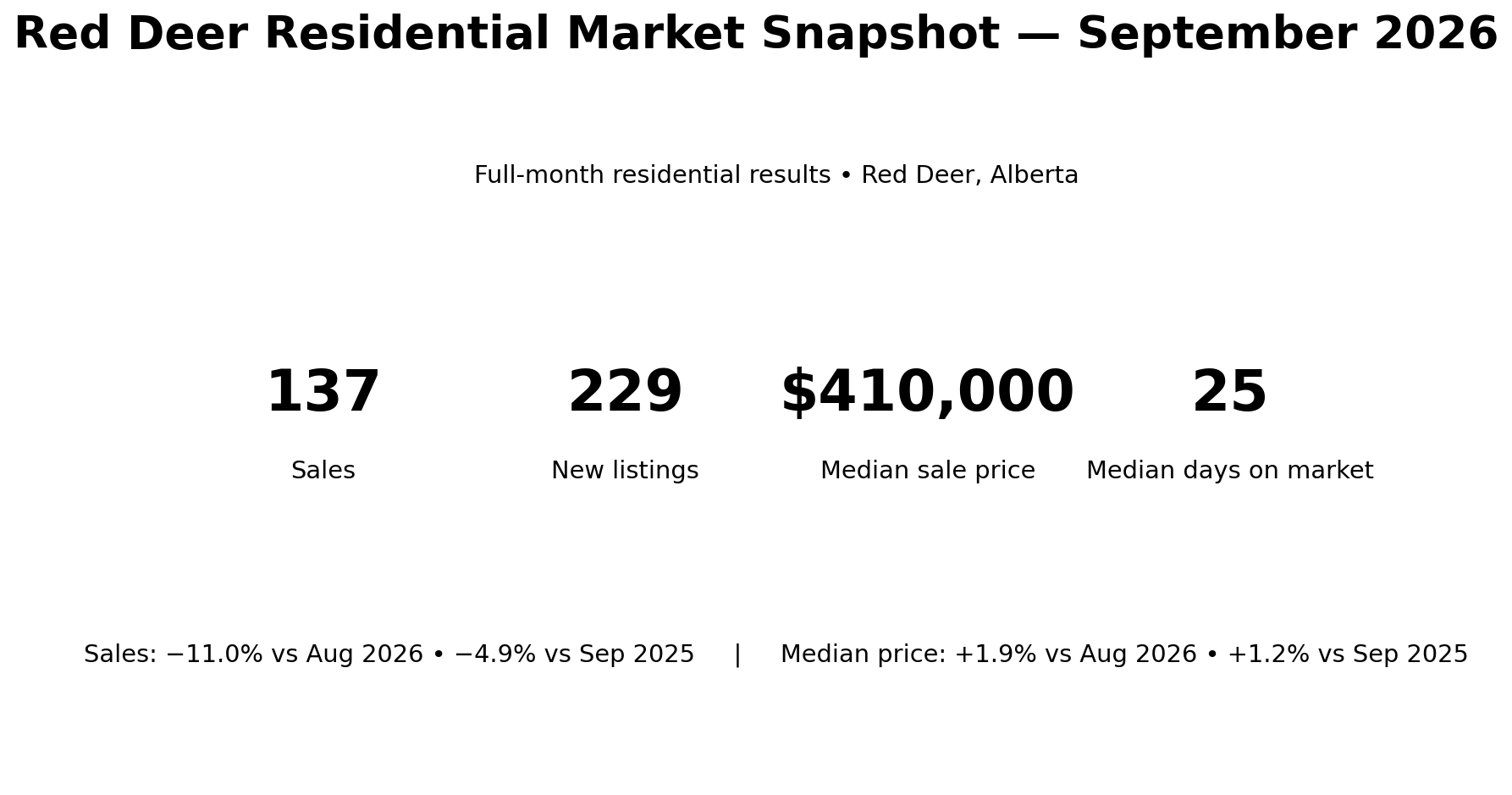
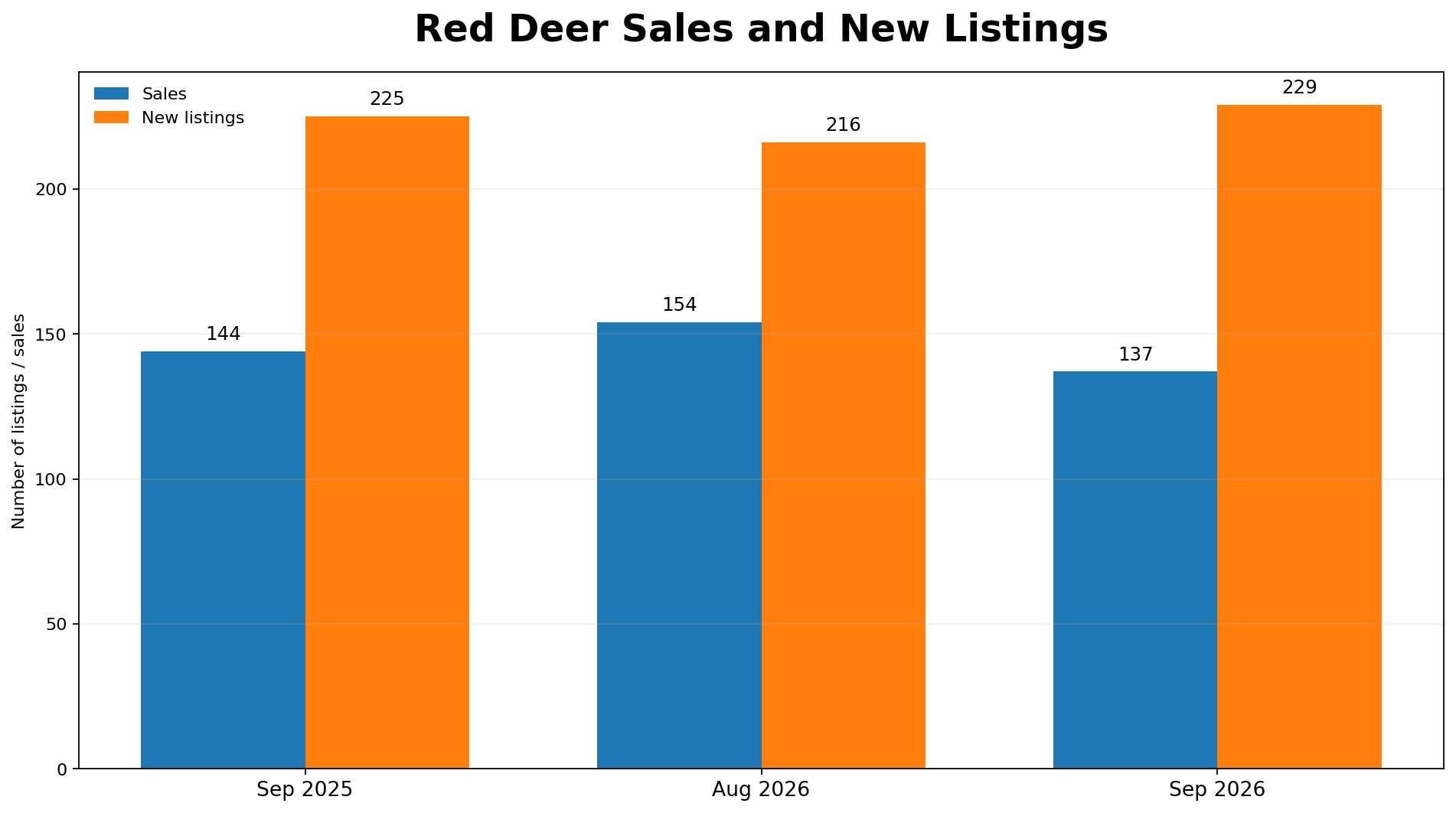
Red Deer recorded 137 residential sales in September, along with 229 new listings.

The median sale price was $410,000 and the median property took 25 days to sell.

Red Deer residential real estate market snapshot September 2026
Sales & inventory

Sales eased while new listings increased

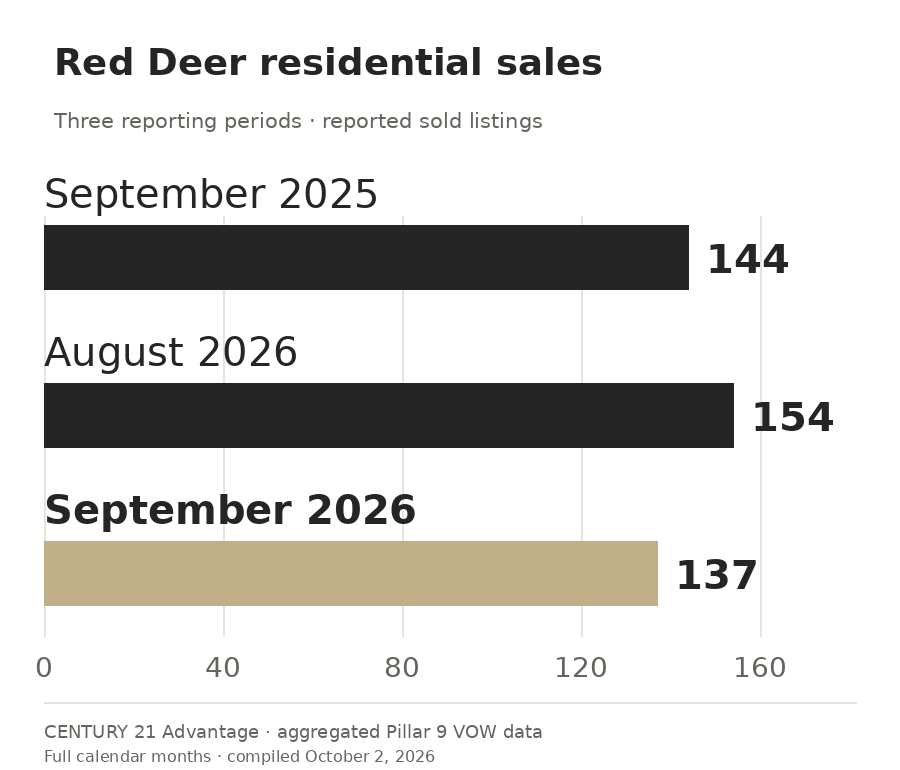
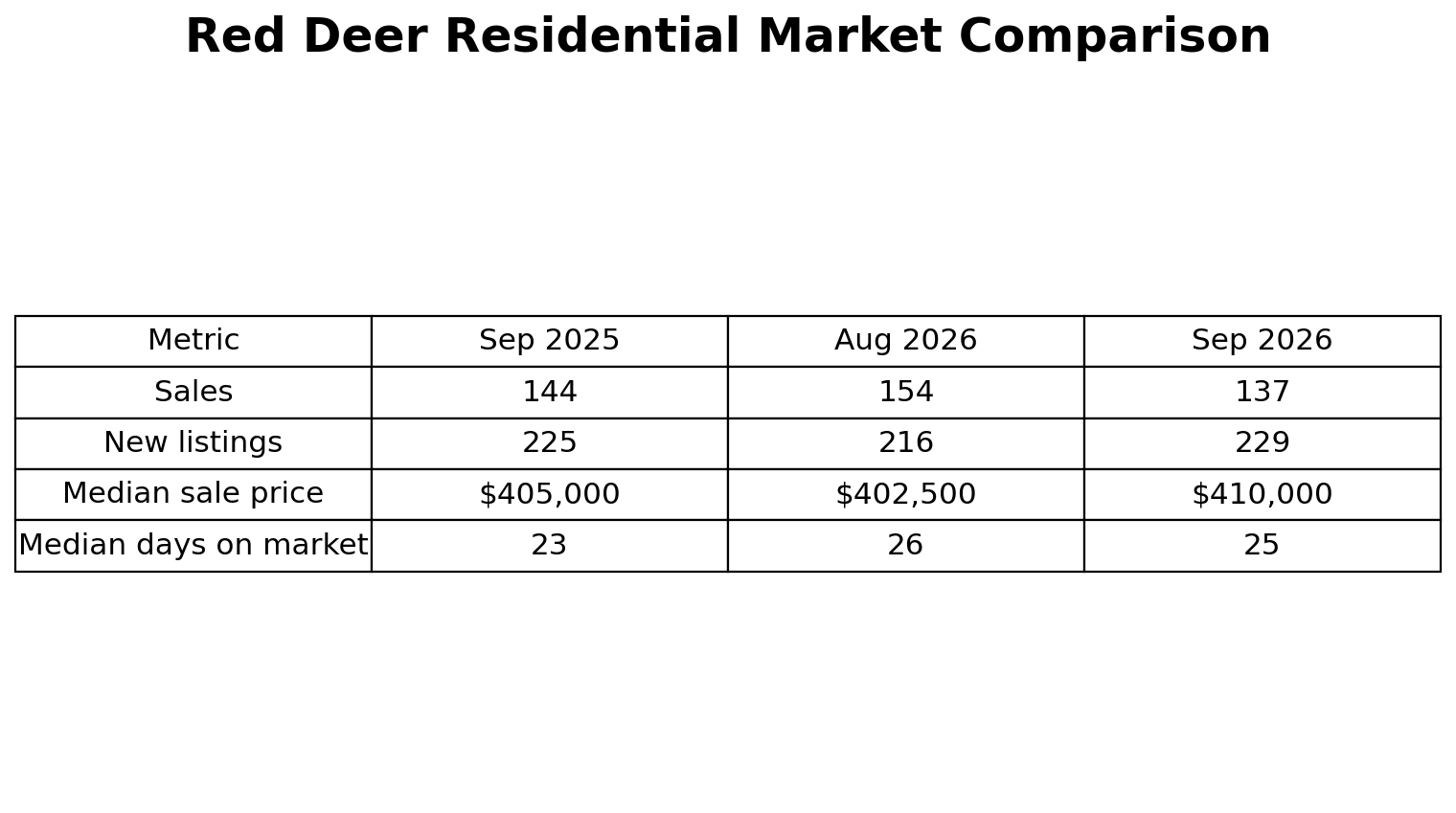
September finished with 137 residential sales. That compares with 154 sales in August 2026 and 144 sales in September 2025.

New listing activity moved the other direction. There were 229 new residential listings in September, compared with 216 in August and 225 in September of last year.

Red Deer residential sales and new listings comparison September 2025 August 2026 and September 2026
Red Deer residential sales and new listing activity.

That combination — fewer completed sales and more new listings — gave buyers somewhat more choice during the month, although the balance can still look very different depending on the segment of the market.

Sales comparison

September sales were below both August and last September

September sales were approximately 11% lower than August and about 5% below September 2025.

Red Deer residential sales comparison September 2026
Pricing

Median sale price moved higher

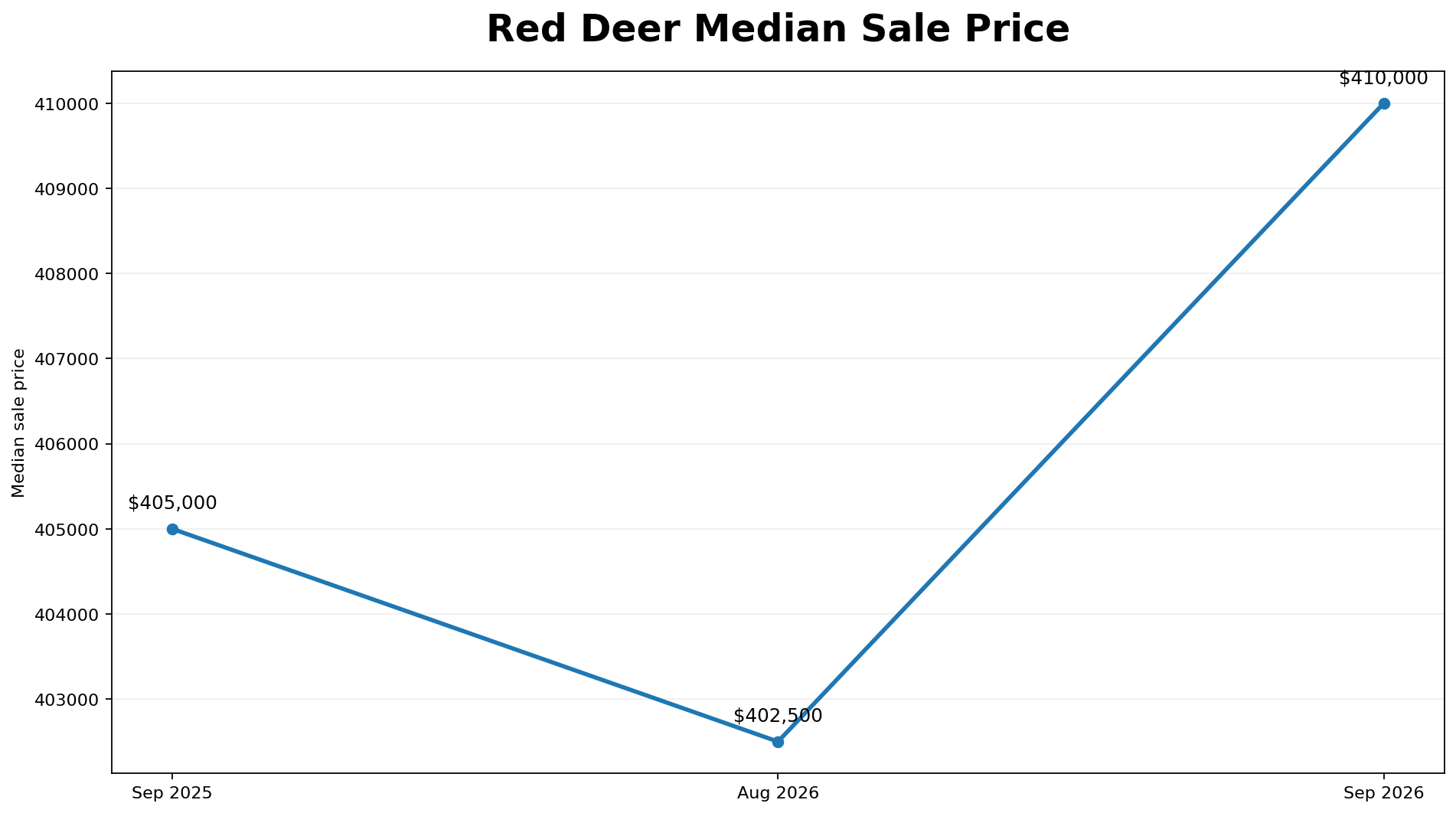
The September median sale price was $410,000.

That compares with $402,500 in August and $405,000 in September 2025. On that basis, the median increased approximately 1.9% month-over-month and 1.2% year-over-year.

Red Deer median residential sale price comparison September 2025 August 2026 September 2026
Median sale price comparison for Red Deer residential properties.
Days on market

Homes continued to move at a relatively steady pace

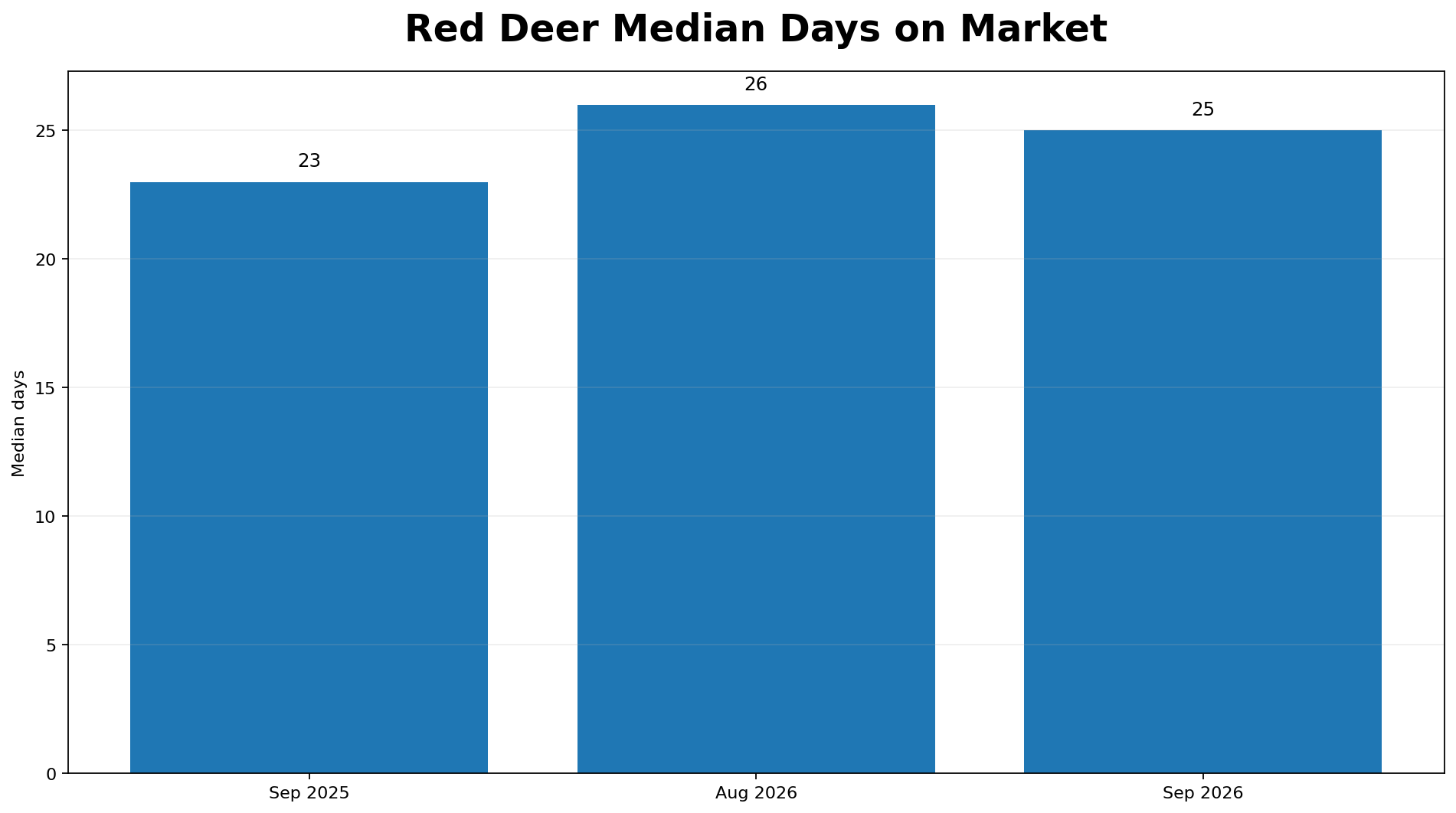
The median days on market in September was 25 days.

That was slightly faster than August's 26 days, although a little slower than the 23-day median recorded in September 2025.

Red Deer median days on market September 2025 August 2026 and September 2026
Median days on market for Red Deer residential sales.
September in context

The three-period comparison

Looking at September beside both the previous month and the same month last year helps separate normal month-to-month movement from broader market changes.

Red Deer residential market comparison September 2025 August 2026 and September 2026
Market perspective

What the September numbers mean

For sellers

The rise in new listings means buyers may have more properties to compare. Pricing and presentation therefore remain important, especially when several similar homes are competing for the same buyer.

The higher median price is positive context, but it doesn't mean every home or neighbourhood increased by the same amount.

For buyers

More new listings can create additional choice, but well-priced properties can still attract attention quickly.

Comparable sales, property condition, location and competing inventory remain more important than relying on the city-wide average alone.

Neighbourhood context

Red Deer isn't one single market

City-wide statistics are useful, but buyers shopping in Anders, Clearview, Deer Park, Rosedale, West Park or another Red Deer neighbourhood may be dealing with very different inventory, property styles and price ranges.

That's why I use the overall market numbers as context and then look more closely at the neighbourhood, property type and recent comparable sales that are actually relevant to the property.

Your Red Deer market

What could your home sell for today?

Market averages are a useful starting point. A property-specific review looks at your neighbourhood, home style, condition, competition and recent comparable sales.

Request a Home Value Review

Red Deer Home-Selling Advice

What Should You Fix Before Selling a House in Red Deer?

If you know something in your home needs repair, deal with it before listing when you reasonably can. Buyers rarely want to inherit someone else’s problem, and uncertainty about damage can cost more during negotiations than addressing it beforehand.

Well-maintained detached home in a Red Deer residential neighbourhood.

Fix Problems First

Which repairs matter most to buyers?

Start with known defects, water concerns and components that may complicate insurance. Cosmetic improvements matter, but they cannot distract buyers from an unresolved problem.

A visible leak or evidence of previous moisture immediately creates questions. Buyers may not know how long the problem existed, what is happening behind the wall or whether mould could be present. Even when the repair is manageable, the uncertainty can cause a buyer to move on.

Some older Red Deer homes also contain Poly-B plumbing. The Insurance Bureau of Canada notes that Poly-B can be susceptible to failure and that some insurers may apply exclusions. Have the system assessed by a qualified professional and encourage prospective buyers to confirm their own coverage options with an insurance representative.

Do not hide uncertainty

If you complete a repair, keep the paid invoice, inspection result, service record, warranty and any supporting photographs. Clear documentation helps buyers understand what was done and can make the conversation easier during an inspection or negotiation.

Best Low-Cost Improvements

Where should sellers spend their time and money?

  1. Deep cleanA thorough cleaning is usually the least expensive improvement. Hiring a professional for several hours—or a full day—can be money well spent, particularly for areas that are difficult to reach or easy to overlook.
  2. DeclutterRemove dated furnishings, excess décor and unnecessary items. Buyers should be able to move through the home easily, understand the size of each room and focus on the property rather than its contents.
  3. Paint selectivelyA fresh coat of paint can brighten a room and make the overall presentation feel more current. Choose a broadly appealing palette that works with the flooring, cabinets and fixed finishes already in the home.
  4. Improve curb appealStart at the curb and work toward the front door. Cut and water the grass, remove weeds, thin overgrown plants, clean hard surfaces and make the entrance feel orderly and maintained.
  5. Correct the lightingMake sure bulbs in the same area use a consistent colour temperature. Replace a dated fixture when it clearly conflicts with the rest of the décor, but do not assume every light in the house needs to be changed.

Avoid Overspending

Should I replace my windows before selling?

Usually not—unless the windows are broken, damaged or in genuine disrepair. Replacing serviceable windows for energy efficiency alone may cost more than the increase they produce in the eventual sale price.

New windows can certainly be a positive feature, but sellers should distinguish between maintaining the home and completing a major upgrade for the next owner. If the existing windows work properly, the better decision may be to clean them thoroughly, repair damaged screens or hardware and price the property according to its overall age and condition.

The same cost-versus-return test should guide other cosmetic projects. If the available budget will not complete the work to a good standard, it may be better to leave the choice to the buyer and reflect the dated finish in the pricing strategy. Poorly executed do-it-yourself work can create another concern rather than adding value.

Quick Answers

Frequently asked questions

Do I need to renovate before listing my Red Deer home?

Usually, no. Address known defects first, then focus on cleaning, decluttering and selective improvements that help the existing home show its best.

Will I recover everything I spend on updates?

Not necessarily. An improvement may help a home sell more readily without returning its full cost. Compare the likely buyer benefit with the complete cost before proceeding.

Should I complete the repairs myself?

Only if you can complete the work safely and to a good standard. Electrical, plumbing, structural and other regulated work should be handled by appropriately qualified professionals when required.

Before You Start Renovating

Let’s decide what is worth doing

I can walk through your home, review its current competition and help you separate worthwhile preparation from work that may not improve your bottom line.

Plan My Home Sale
Patrick Galesloot, Broker/Owner of Century 21 Advantage, preparing real estate advice for Red Deer homeowners

Red Deer Seller Questions · September 2026

What Sellers Are Asking in Red Deer Right Now

If you are thinking about selling a house in Red Deer, the biggest questions are usually about price, timing and what happens next. Here are the practical answers I am sharing with local homeowners right now.

Question 1

Is now a good time to sell a house in Red Deer?

Red Deer remains an active real estate market, but buyers have more choice and are becoming more selective. A well-priced home that shows good value can still attract serious interest, while an ambitious starting price can extend the selling process.

We are entering the seasonal slowdown that normally accompanies the end of summer and the return to school. Listing inventory has stabilized and buyer demand remains consistent, but I would not describe this as a market where every seller can simply “try a little higher.”

For most sellers, the better question is not simply, “Is this a good market?” It is, “What is the market for my home?”

154Residential sales
215New listings
43Average days on market
98.1%Average sale-to-list price

August 2026 residential MLS® System data for Red Deer. City-wide figures do not predict the result for an individual property.

To assess your individual market, I look at recent comparable sales, current competition, the condition and presentation of your home, buyer activity in its price range and the timeline behind your move.

Read the full August 2026 Red Deer market update →

Question 2

Can I still get top dollar?

You can work toward the strongest price the market supports, but “top dollar” does not mean choosing the highest possible asking price. It means positioning the property so buyers understand its value and have a reason to act.

When a seller asks a premium price, buyers look for details that justify it: updated mechanical systems, quality finishes, current décor, good maintenance and features that compare favourably with other available homes.

Question 3

What if I price a little high?

An overpriced home often takes longer to sell and may eventually require a reduction. As the listing sits, buyers may assume there is a problem—or that the home is still overpriced.

If you choose to test a higher price, understand the possible consequences and set an adjustment plan in advance based on time, showing activity, feedback and competing sales.

Well-maintained detached home in a Red Deer residential neighbourhood.

Question 4

How long will it take to sell my Red Deer home?

No one can promise exactly how long an individual home will take to sell. Sellers should plan for market exposure and showings, followed by negotiation and a buyer’s condition period.

The August 2026 city-wide average was 43 days on market, but an average is not a deadline. A well-positioned property may sell sooner, while an overpriced home—or one with a smaller buyer pool—may take longer.

A normal scenario can include approximately two weeks of marketing and showings before a successful offer, followed by a condition period that is typically kept within about two weeks. The actual dates depend on the contract and circumstances.

If we are fortunate enough to hit the pricing sweet spot, the disruption may be shorter and the offers stronger. Competing offers are possible, but they should never be treated as a guarantee.

Questions 5 & 6

Selling and buying: which comes first?

Should I sell before I buy?

For most people who need the proceeds from their existing property, selling first provides greater financial clarity and a stronger negotiating position when buying. You know your sale price, expected net proceeds and the timeline you need to work within.

An offer subject to selling your existing home is possible, but it may weaken your negotiating position or limit the seller’s flexibility on price.

What if I cannot find my next home?

This concern is understandable. Depending on the circumstances, we can discuss a seller’s condition related to securing a suitable replacement property, a longer possession period or temporary accommodation.

Any condition must be drafted carefully and accepted by the buyer. The right approach depends on your finances, available inventory, risk tolerance and moving deadline.

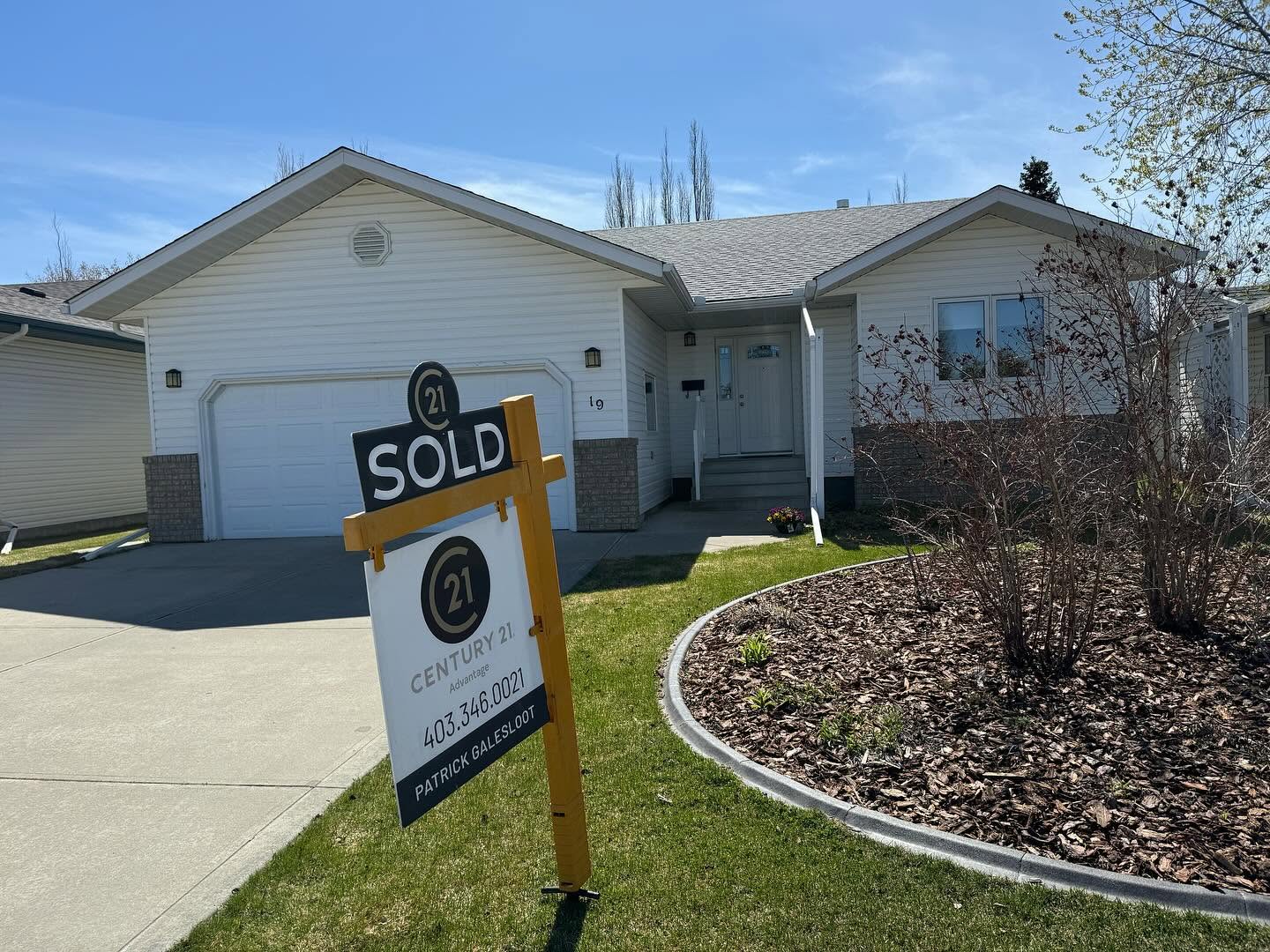
Century 21 Advantage sold sign outside a Red Deer home.

Question 7

How early should I start preparing to sell?

Starting the conversation one or two months before you hope to list gives you time to make informed decisions, complete worthwhile work without rushing and update the pricing analysis when the home is ready.

The listing itself can often be prepared in a week or less. I generally need a day or two for detailed market research, plus at least three or four business days to coordinate professional photography. During the peak spring market, a week’s notice for photography is safer.

The bigger question is whether the home is ready. You may need a week—or a month—to:

  1. Declutter and remove items you no longer need.
  2. Complete a thorough cleaning.
  3. Address known maintenance or repair items.
  4. Make selective cosmetic updates where the return makes sense.
  5. Prepare the property for photography and showings.

I work backward from when you want or need to be settled into your next home. If the goal is to move before Christmas, for example, preparation, market time, conditions, conveyancing and possession all need to fit before that date.

Question 8

How will I know what my bottom line will be?

A detailed Net Sheet shows the estimated proceeds and deductions from your sale, giving you a clearer picture of what you may have available for your next move.

Most sellers are less concerned about one fee in isolation than they are about the final result. They want to know whether the sale will pay out the mortgage, cover the associated costs and leave enough to accomplish what they want to do next.

For that reason, I prepare a detailed Net Sheet for my seller clients. Depending on the situation, it can account for:

  • the estimated sale price;
  • the approximate mortgage payout provided by the seller or lender;
  • real estate fees and applicable GST;
  • estimated legal costs;
  • property tax adjustments; and
  • other known costs specific to the transaction.

The figures remain estimates until the lawyer and lender prepare the final statements, but they provide a practical basis for making a decision. Tax, mortgage and legal questions should be confirmed with the appropriate accountant, lender or lawyer.

Question 9

Do solar panels add value when selling in Red Deer?

Solar panels can make a home more appealing, but they are not yet a must-have feature for most Red Deer buyers. They are more likely to support a premium when the system is owned outright and its financial benefit is clearly documented.

The biggest concern I hear is not necessarily about the panels themselves. Buyers do not generally want to assume someone else’s lease or financing obligation. The same concern can arise with financed furnaces, air-conditioning systems and other home improvements.

Before listing a home with solar panels, gather the purchase or lease agreement, outstanding balance and payout terms, system specifications, warranties, production records, recent power bills and documentation of any credits, revenue or savings.

Clear records help buyers recognize the benefit. A seller considering a new solar installation shortly before moving should review the commitment carefully rather than assume the full cost will be recovered through the sale.

Quick Answers

Frequently asked questions about selling in Red Deer

What is the first step in selling my Red Deer home?

Start with a conversation about the property, your timing and what you want the sale to accomplish. From there, I can review comparable sales, current competition and any work that may help prepare the home for market.

Do I need to renovate before selling?

Usually, no. Known defects should generally be addressed when practical, but cleaning, decluttering, minor repairs and thoughtful presentation may offer better value than a major renovation.

Will pricing below market guarantee multiple offers?

No. A lower list price may increase attention, but it cannot guarantee competing offers or a particular sale price. The strategy should reflect the property, buyer demand, competition and your tolerance for risk.

Can I make an offer before my current home sells?

Yes, but the financing and timing risks need to be understood. A sale-of-buyer’s-home condition may provide some protection, although it can make your offer less attractive to the seller.

How accurate is a home value prepared months before listing?

It is useful for early planning, but the recommended list price should be reviewed shortly before the property enters the market. New competition, recent sales and changing buyer activity can affect the strategy.

Plan With Confidence

Start with a clear picture of your sale

If you are considering selling a house in Red Deer, I can prepare a current pricing review and detailed Net Sheet so you can see whether the move you have in mind is realistic. No pressure—just clear information to help you plan.

Plan My Home Sale
Red Deer Real Estate Market Update · August 2026

Is the Red Deer Real Estate Market Slowing Down?

“How’s the market?”

It’s still the question I hear most often. But lately, there’s been a slight change:

“Is the Red Deer market starting to slow down?”

There are some signs of moderation. Buyers have more properties to choose from, sales activity has eased, and we’re moving into a time of year when the market normally slows somewhat.

But I wouldn’t call what we’re seeing a major market correction.

For now, I’d describe Red Deer as a healthy, active housing market beginning to move toward more balanced conditions.

Anders On The Lake

Red Deer Market at a Glance

August 2026 Residential MLS® Data
215
New Listings
154
Sales
386
Active Listings
$431,692
Average Sale Price
43
Average Days on Market
98.1%
Sale-to-List Price
Source: MLS® System data for residential properties in Red Deer.
The Bottom Line

Red Deer remains an active housing market. Buyers have more choice than they did earlier in the year, but homes are still selling relatively close to asking price.

The signs I'm watching point more toward a normal seasonal slowdown and a gradual move toward balanced conditions than a significant market correction.

So, Is the Market Actually Slowing Down?

Yes — somewhat. But context matters.

There are three things I’m paying particular attention to right now: buyer choice, sales activity, and how close homes are still selling to asking price.

02

Sales Are Moderating

Red Deer recorded 154 residential sales in August, compared with 215 new listings coming onto the market.

That relationship is worth watching because it can gradually shift the balance between supply and demand.

At the same time, context matters. Late summer and fall typically bring some seasonal slowing in Red Deer and Central Alberta.

Seasonal slowdown ≠ market correction

One month doesn't define a trend. What happens over the next several months will tell us much more about the direction of the market.

03

Sellers Are Still Getting Close to Asking Price

One number that stands out this month is the 98.1% sale-to-list-price ratio.

Even with buyers having more choice, homes that are selling are still achieving prices relatively close to their asking price.

98.1% Average Sale-to-List Price

Of course, that is a city-wide average. Results can vary significantly depending on neighbourhood, property type, condition, price range and how accurately the home was priced from the beginning.

Buyers are still buying. They’re just becoming a little more selective.

01

Buyers Have More Choice

There were 386 active residential listings in Red Deer at the end of August.

More inventory gives buyers the opportunity to compare properties instead of feeling they have to jump on the first suitable home they see.

That changes the equation for sellers too.

Your home isn't just competing against what sold three or six months ago. It's competing against the homes buyers can choose from today.

As inventory grows, pricing, condition and presentation become increasingly important.

Patrick's Perspective

What I’m Seeing Beyond the Numbers

MLS® statistics give us the big picture, but they don’t always tell the whole story. Working with buyers and sellers day to day gives me another perspective on how the market is actually feeling.

Buyers Seem a Little Less Rushed

When several comparable homes are available, buyers are more willing to look at all of their options before making a decision.

Value Matters More

Buyers are paying closer attention to how one property compares with another. If a home feels noticeably overpriced, they have more opportunity to simply move on.

Good Properties Still Get Attention

A market becoming more balanced doesn’t mean demand has disappeared. Well-priced homes that show well are still attracting serious buyers.

A little less urgency doesn’t mean a weak market. It means strategy matters more.
For Sellers

Thinking About Selling? Here’s What Matters Now.

If you’re considering selling this fall, I wouldn’t get too caught up in whether someone labels Red Deer a “buyer’s market” or a “seller’s market.”

Your individual market matters much more.

✓
Current Competition

Look closely at the homes buyers can choose from right now.

✓
Recent Comparable Sales

Recent sales help establish value, but older sales need to be viewed in today’s market context.

✓
Days on Market

How quickly are similar homes actually selling in your price range and neighbourhood?

✓
Condition & Presentation

As buyers gain more choice, the differences between competing homes become more noticeable.

✓
Pricing Strategy

Your starting price should reflect the market buyers are shopping in today, not simply what worked six months ago.

Patrick’s Take

A changing market doesn’t necessarily mean lowering your expectations. It means being more deliberate about your strategy from the beginning.

For Buyers

Buying? More Choice Is Good — But Be Ready.

For buyers, increasing selection is generally welcome news. You may have a little more time to compare properties, evaluate condition, and think through your options.

More Time to Compare

When inventory increases, buyers can look more closely at neighbourhood, layout, condition and value instead of feeling pressure to act immediately.

More Room to Negotiate

Depending on the property and price range, there may be more opportunity to negotiate than there was in a tighter market.

Good Homes Still Move

Well-priced properties can still attract strong interest. More choice doesn’t mean the right home will sit on the market indefinitely.

The advantage for buyers: more flexibility. But having your financing organized and understanding recent comparable sales still matters.
The Bigger Picture

What About Interest Rates, Tariffs and the Economy?

I’m hearing more questions about this too. Broader economic conditions can absolutely influence real estate — but they don’t affect every market in exactly the same way.

Interest Rates

Borrowing costs affect monthly payments, affordability and how much buyers are comfortable spending.

Employment

Job stability and local economic confidence play a major role in whether people feel ready to buy or sell.

Tariffs & Costs

Trade uncertainty and higher material costs can influence construction, renovations and the cost of new housing.

Consumer Confidence

Even when people can afford to move, uncertainty can cause buyers and sellers to delay major decisions.

But Real Estate Is Local.

National headlines matter, but they don’t automatically tell us what’s happening on a particular street in Red Deer.

Local Supply Buyer Demand Employment Migration Affordability New Construction

That’s why I watch both: the larger economic pressures developing around us and what buyers, sellers and MLS® data are actually telling us here in Red Deer.

The Bottom Line

What Does All of This Mean for Red Deer?

Red Deer remains an active housing market, but we’re seeing signs of more balanced conditions.

Buyers have more choice.
Sales activity has moderated.
Seasonal slowing is beginning to show.
Homes are still selling relatively close to asking price.

So, is the Red Deer real estate market slowing down?

A little.

At this point, though, I see a healthy market moving toward more normal conditions rather than a significant correction.

And as always, the answer can look very different depending on your neighbourhood, property type and price range.

Thinking About Selling?

Wondering What This Market Means for Your Home?

City-wide averages are useful, but they don’t tell you what your particular home may be worth.

If you’re thinking about selling this fall, next spring, or you’re simply curious about what’s happening in your neighbourhood, I’m happy to take a closer look.

We can review recent sales, current competition and what buyers are actually doing in your part of Red Deer.

No pressure. Just good information to help you plan your next move.

Let’s Talk About Your Home →

Red Deer Real Estate Market – July 2025: Prices, Inventory & Tips

Here’s your Red Deer real estate market update for July 2025—key prices, inventory trends, and practical tips for buyers and sellers.

Different House Types in Canada

Row houses in Toronto
Photo: Bardiak (Public Domain) via Wikimedia Commons

When considering a home purchase, one of the first decisions is the style of home you want to live in. Detached, semi-detached, townhouse (row house) and condominium are among the most common options across the country. Each has its pros and cons, so here’s a quick overview to get you started.

  • Single-Detached — Stands alone with its own entrance and front/back yards.
  • Townhouse / Row House — Two or more homes joined in a row, sharing at least one wall; usually 2–3 storeys with a small yard and private entrance.
  • Semi-Detached — Two homes share a common wall; each has its own entrance and yard, often a shared driveway.
  • Condominium / Apartment — Privately owned unit in a larger building; a condo board manages shared areas while owners hold title to their unit.

Want to see what’s available right now? Browse current MLS® listings and filter by property type.

Condo Amenities Worth Considering

Modern apartment/condo lobby
Photo: Sdkb (CC BY-SA 4.0) via Wikimedia Commons

Think about how a condo fits your lifestyle. In-unit amenities like a washer/dryer, air conditioning and a dishwasher add comfort and convenience. A balcony creates outdoor living space—just confirm building rules for décor and furniture.

In the building, look for elevator access, owner/visitor parking and storage. If you have pets, ensure the building is pet-friendly and allows your specific pet. Consider walkability to shops, services and transit at different times of day. Security, lighting and building maintenance schedules matter, too.

Bonus amenities to look for: a fitness centre, pool, rentable common room and concierge service. Make a list of the extras that truly matter to you.

Getting a Mortgage While Self-Employed

Self-employed person working at a laptop
Photo: PxHere (CC0) via Wikimedia Commons

Nearly 13% of Canadians are self-employed, which means the traditional mortgage route isn’t always a perfect fit. The right team—a mortgage professional who specializes in self-employed files, plus your accountant, lawyer and an experienced REALTOR®—can help you qualify at a competitive rate.

The main hurdle is proving income stability. It can take extra documentation and careful presentation of income so lenders can assess it with confidence. Ideally, your accountant and mortgage professional coordinate before you apply to structure income and taxes, prepare the down payment and present your file in the best light.

Designing a Nursery That Will Grow With Your Child

Modern nursery with crib and dresser
Photo: Ajay Suresh (CC BY 2.0) via Wikimedia Commons

To avoid frequent full makeovers, start with longevity. Choose neutral wall colours (greys, beiges, whites, earthy tones) that work with evolving interests. Refresh the look over time with accessories, curtains and bedding.

Invest in quality, flexible furniture: a crib that converts to a toddler/day bed; a dresser that doubles as a change table; and comfortable seating large enough for you and your growing child. Consider room-darkening blinds for naps and summer evenings.

Red Deer Stats — July 2025

  • Total residential average price: $404,783 (↑ 10.0% YoY)
  • Detached average: $491,763 (↑ 14.7% YoY)
  • Apartment average: $205,219 (↓ 2.3% YoY)
  • Sales-to-new listings: 77%; Months of inventory: 1.48

Average Sale Price

  • Detached: $491,763 ↑ 14.7% YoY
  • Apartment: $205,219 ↓ 2.3% YoY
  • Total: $404,783 ↑ 10.0% YoY

Inventory & Flow

  • Active: SFD 222 · Apt 43 · Total 315
  • Sold: SFD 124 · Apt 21 · Total 213
  • New: SFD 187 · Apt 23 · Total 276

Market Ratios

  • Sales-to-New Listings: 77%
  • Months of Inventory: 1.48

Source: CARA — Central Alberta REALTORS® Association (Pillar 9 monthly statistics). City-wide averages vary by location, size, and condition. For pricing tailored to your property, request a free home valuation.

Red Deer Market: FAQs (July 2025)

Is Red Deer a buyer’s or seller’s market right now?

With roughly 1.5 months of inventory and a 77% sales-to-new-listings ratio, conditions favour sellers in most price bands.

What’s the average home price in Red Deer?

Total residential averaged about $405K in July 2025, with detached just under $492K and apartments near $205K.

How do I price my home correctly?

Start with neighbourhood comps and recent condition-adjusted sales. Request a free valuation for tailored pricing.

Can I still buy with 5% down?

Yes—speak with your lender about insured options and current stress-test requirements. I can refer trusted local brokers.

Home Trends & Red Deer Real Estate Insights – July 2025

Home Trends & Real Estate Insights – July 2025

By Patrick Galesloot | Broker/Owner | Century 21 Advantage

Creating a Well-Organized Kitchen

Whether you’re preparing a gourmet dinner or simply heating up leftovers, a well-organized kitchen makes life easier. You don’t need a full remodel—sometimes, all it takes is maximizing the space you already have.

Adding a credenza or hutch can provide extra storage and serving space, keeping essentials within easy reach and clutter off the counters. Use drawer and cupboard organizers to ensure tools stay accessible, and group similar items together to reduce visual mess and simplify grocery lists.

Clear containers and baskets help you quickly identify what’s inside, and a label maker is a favourite tool among professional organizers. Once everything has a home, consider updating your kitchen lighting to enhance visibility and create a more open, inviting atmosphere.

7 Tips to Make Moving Day Easier

  • Take Pictures: Photograph your electronics and setups before unplugging anything for easy reassembly.
  • Label & Colour Code: Label boxes by room and contents. Snap a picture before sealing for quick reference.
  • Use What You Have: Suitcases, bins, and baskets can double as moving containers.
  • Measure Ahead: Make sure your furniture fits through doorways in your new home.
  • Wrap with Care: Use towels or blankets to protect delicate items.
  • Bag the Hardware: Store furniture hardware in labeled bags and tape them to the matching piece.
  • Pre-Pack: Finish most of your packing before moving day to reduce last-minute stress.

Repairing Your Lawn with Overseeding

Is your lawn looking tired or patchy? Overseeding can restore it beautifully—perfect if you're prepping to sell. Here’s how:

  1. Prep the Lawn: Mow, bag the clippings, rake debris, and optionally aerate.
  2. Spread Enriched Soil: Add about ¼ inch of compost to support seed germination.
  3. Fertilize: Use a starter fertilizer to encourage growth.
  4. Sow Seed: Mix grass types for a resilient lawn. Check with your local garden centre for guidance.
  5. Water Daily: Keep the area moist for at least a week. Avoid foot traffic until grass blends in.

How to Dry Herbs for Year-Round Use

Have an overflowing herb garden? Drying herbs like oregano, thyme, and rosemary is easy. Tie them into bundles and hang in a dry, dark, cool spot until they crumble. If you're short on time, use an oven or dehydrator—especially for moist herbs like basil or mint.

Store dried herbs in airtight containers in a cupboard or pantry, out of the sunlight. They’ll stay fresh for about a year. Always do a “sniff test”—if the scent is weak, so is the flavour. And remember: dried herbs are more potent than fresh, so adjust recipes accordingly.

Red Deer Market Snapshot – June 2025

  • Active Listings: Detached Homes: 190 | Apartments: 44 | Total Residential: 294
  • Average Sale Price: Detached: $486,461 (↑5.7% YOY) | Apartments: $214,825 (↑8.3% YOY) | Overall: $401,802 (↑8.5% YOY)
  • New Listings: Detached: 105 | Apartments: 28 | Total: 232
  • Sold Listings: Detached: 137 | Apartments: 24 | Total: 172
  • Sales-to-New Listings Ratio: 74.1%
  • Months of Inventory: 1.71

Source: CARA – Central Alberta REALTORS® Association

Note: Market stats are averages. Curious what your home is worth? Let’s chat.

Need Real Estate Advice?

Whether you're buying, selling, or just exploring your options, I'm happy to help you navigate the Central Alberta real estate market.

📞 Call/Text: (825) 251-8730
📧 Email: patrick@century21advantage.ca
🌐 Website: patrickgalesloot.com

Welcome to the 2025 edition of Patrick’s Real Estate Newsletter! In this issue, we reflect on the past year, share insights into the local housing market, and provide valuable tips for homeowners and buyers in Red Deer, Alberta.

Red Deer Real Estate Market

Reflecting on 2024.

The 2024 real estate market in Red Deer demonstrated remarkable resilience despite some challenges. Interest rates were a dominant topic, significantly shaping market activity and consumer behaviour. Yet, our community’s strong sense of connection and ongoing economic growth played a vital role in stabilizing the housing market and maintaining optimism.

General Insights.

Total Sales Comparison:

  • 2024 total sales: 1,820
  • 2023 total sales: 1,842

There was a slight decline in overall sales, indicating a stable but slightly slower market.

Peak Months: April, May and June
consistently show the highest sales
for 2023 and 2024, making spring the
most active season.

Slower Months: January, February, and December show lower activity, which is typical for winter months in the real estate market.

Optimal Selling Window:

Spring and early summer (April to June) are the best times to list a home, as this period shows the highest demand based on sales activity.

Sellers should prepare their homes during the winter months to capitalize on spring activity.

Community Insights

Each community in Central Alberta has benefited from the improved economy. Reviewing our slides below you'll note some similarities as well as some unique differences. See the comparisons below for January 1 - December 31, 2024:

Red Deer led the way with sales and listings as one would expect due to the population size of the community.

Sales New Listings
Sylvan Lake 290 368
Red Deer 1,111 1,420
Lacombe 175 219
Blackfalds 186 232
Penhold 53 58
Innisfail 119 131


The most affordable house price was reported by Innisfail with an average of $355,517. Meanwhile, Sylvan Lake has the highest average sale price of a house with $462,945 for a home.

  • Penhold $400,231
  • Innisfail $355,517
  • Lacombe $432,273
  • Blackfalds $429,441
  • Red Deer $449,696
  • Sylvan Lake $462,945