What the September 2026 Red Deer Real Estate Market Is Telling Us
Red Deer continues to be a relatively tight housing market heading into fall, but the numbers tell a more useful story when we look beyond average price alone. Inventory, sales activity, absorption and what homes are actually selling for compared with asking price all help show where buyers and sellers stand today.
Red Deer Remains Active, With Limited Inventory Relative to Sales
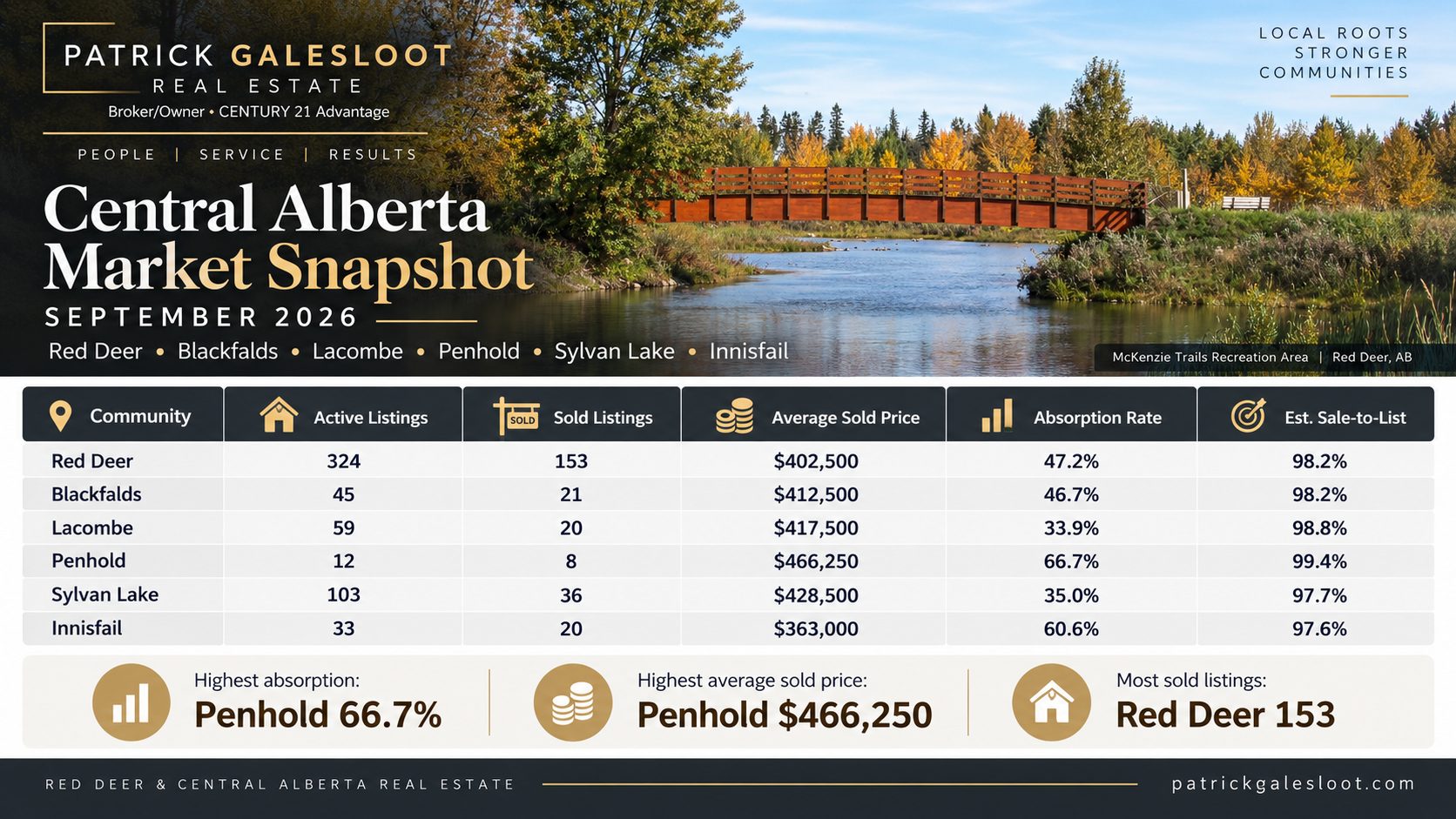
The September market snapshot shows 324 active listings in Red Deer compared with 153 sold listings. That relationship between available inventory and completed sales continues to put Red Deer on the tighter side of the market.
Red Deer's average sold price in the current comparison is $402,500, with an absorption rate of 47.2% and an estimated sale-to-list ratio of approximately 98.2%.
Those numbers matter because they describe more than simply whether prices are up or down. They help us understand how much selection buyers have, how quickly the market is absorbing available homes and how closely sellers are ultimately getting to their asking prices.
How Red Deer Home Prices Compare With Nearby Communities
Red Deer is not an isolated real estate market. Buyers frequently compare homes in Red Deer with Blackfalds, Lacombe, Penhold, Sylvan Lake and Innisfail, particularly when location, commute and property type are flexible.
In this September comparison, Penhold recorded the highest average sold price at $466,250. Sylvan Lake followed at $428,500, Lacombe at $417,500, Blackfalds at $412,500, Red Deer at $402,500 and Innisfail at $363,000.
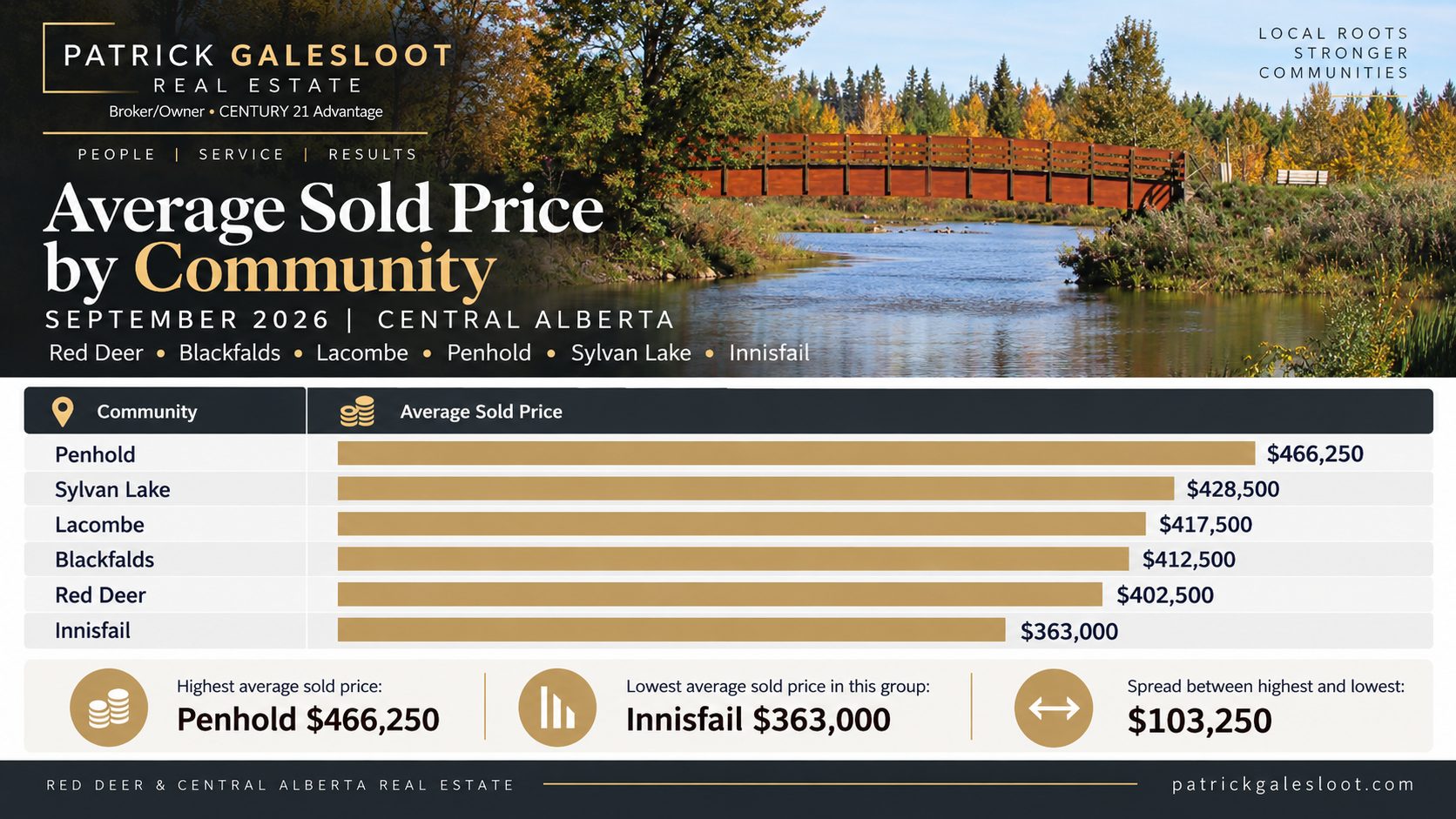
Average price is useful, but it needs context. A community with several higher-end detached homes selling in one month can see its average jump substantially. The same is true in reverse when more entry-level homes, townhomes or condominiums make up the sales mix.
That is why I would never recommend pricing a Red Deer home simply by looking at the overall city average. The right comparison is much narrower: neighbourhood, property type, size, age, condition, recent comparable sales and the competition buyers can choose from right now.
Red Deer Has About 2.1 Months of Inventory
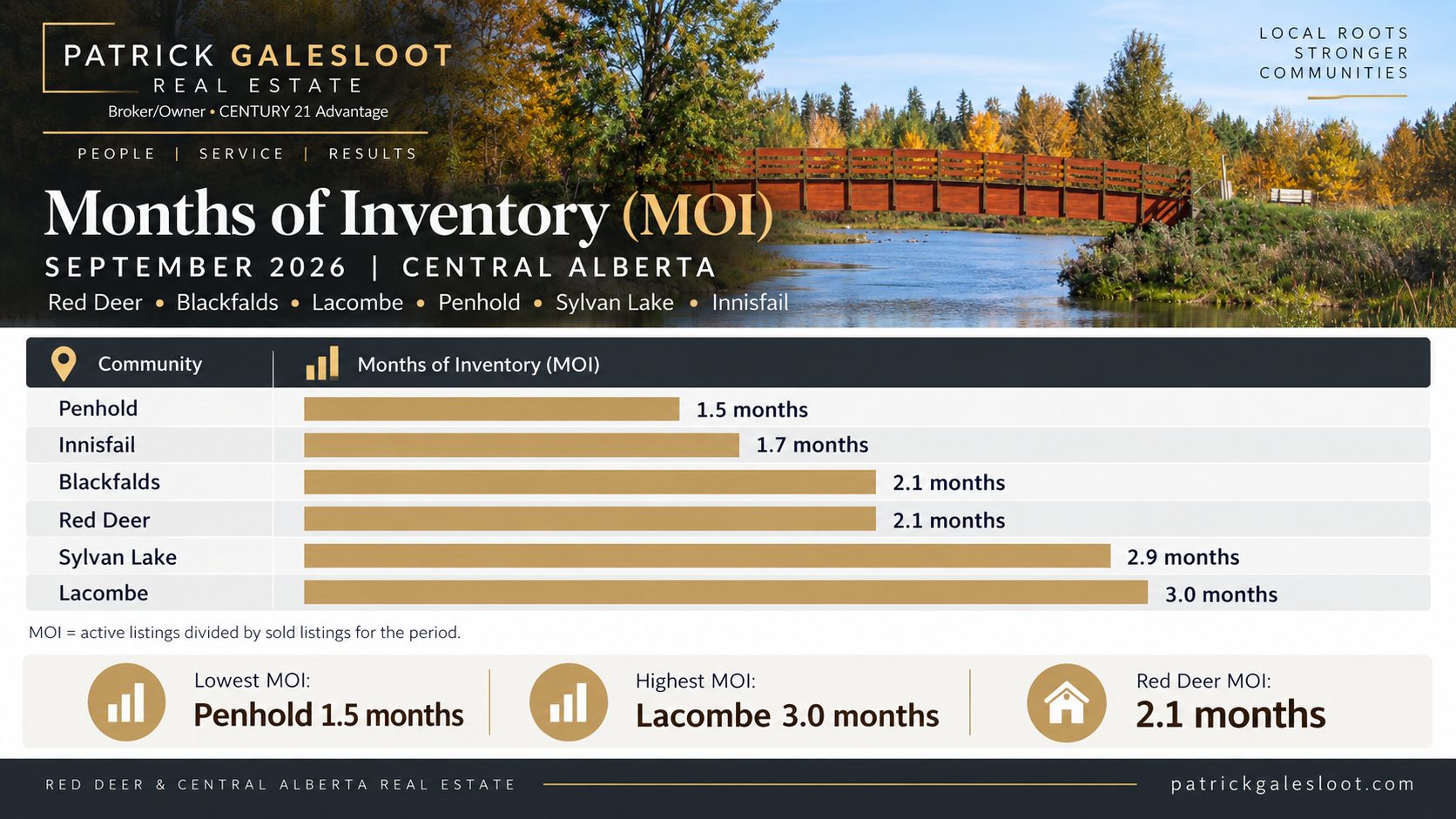
Months of Inventory is one of the indicators I find most useful when explaining market conditions to clients. It estimates how long it would take to sell the available inventory at the current pace of sales if no new listings came onto the market.
Red Deer currently sits at approximately 2.1 months of inventory. Blackfalds is at a similar level, while Penhold is tighter at approximately 1.5 months and Innisfail is around 1.7 months.
Sylvan Lake and Lacombe have more supply relative to sales, at approximately 2.9 and 3.0 months respectively.
What Low Inventory Means for Sellers
Sellers benefit from having fewer competing homes, but low inventory does not mean every property will sell quickly at any price. Buyers still compare value carefully, particularly once a listing has accumulated market time.
What Low Inventory Means for Buyers
Buyers should be prepared when a well-priced home appears. The strongest properties can still attract competition even when the broader market feels calmer than it did earlier in the year.
Red Deer Homes Are Selling Close to Asking Price
Red Deer's estimated sale-to-list ratio is approximately 98.2%. In simple terms, homes in the current data set are generally selling quite close to the asking price.
The surrounding communities tell a similar story. Penhold is approximately 99.4%, Lacombe 98.8%, Blackfalds 98.2%, Sylvan Lake 97.7% and Innisfail 97.6%.
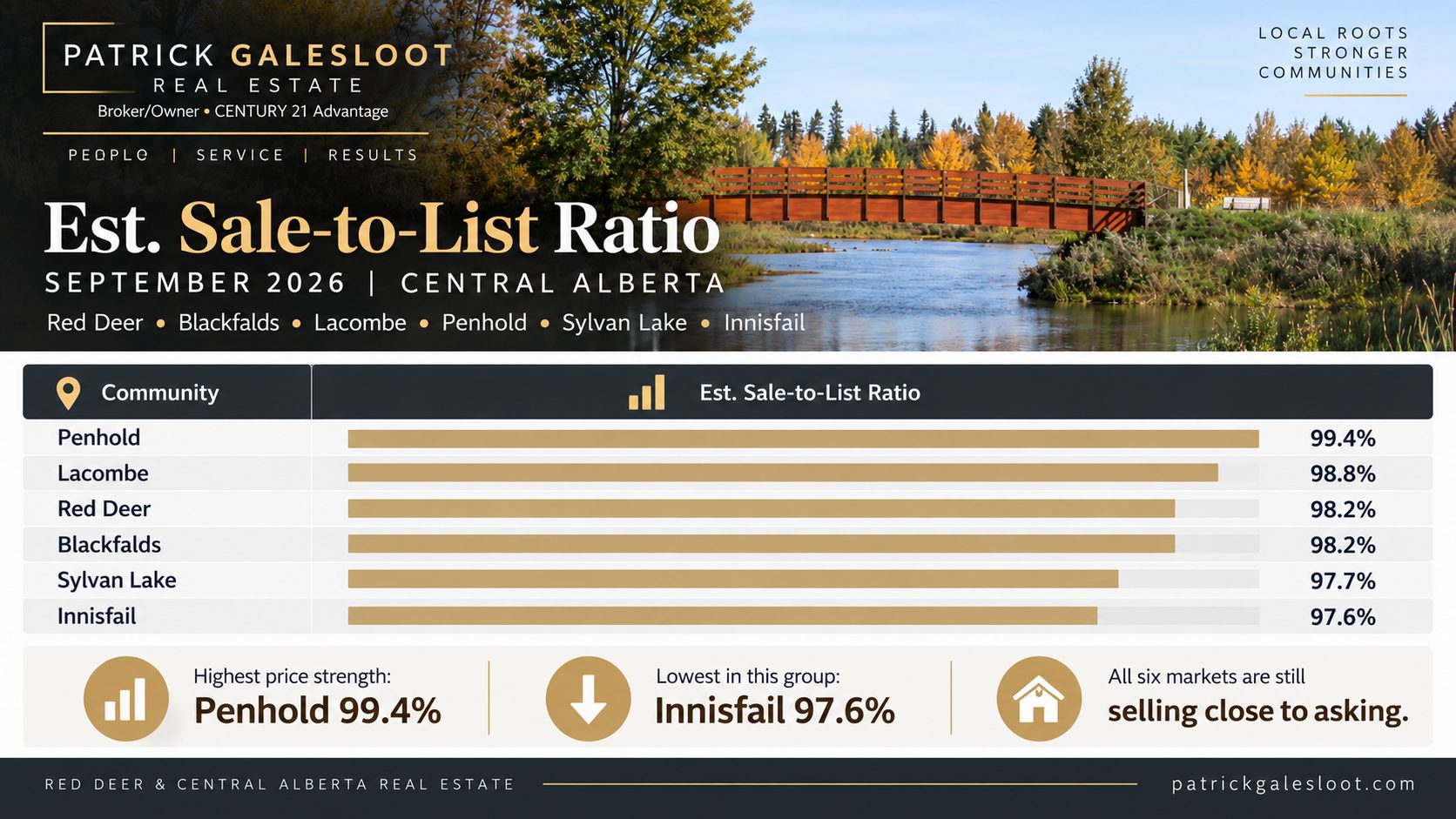
That does not mean buyers should automatically offer 98% of asking price. It means sellers, on average, are not having to give away large discounts to get transactions completed.
Negotiating strategy still depends heavily on the property itself. A new listing priced well can require a very different approach from a home that has been on the market for 60 days, has already reduced its price or is competing with several similar properties.
The Red Deer Market Is Really a Collection of Smaller Markets
The city-wide statistics are valuable, but they are only the first layer. Conditions can vary considerably between Red Deer neighbourhoods and price ranges.
A detached home in Anders, Deer Park, Vanier Woods or Lancaster is not necessarily competing with the same buyer pool as a condominium downtown, an older bungalow in Morrisroe or a newer home in Timber Ridge.
The same is true by price range. Inventory may be tight below one price point and noticeably more competitive for sellers at another. That is why I am increasingly looking at market indicators such as price reductions, inventory age, pending sales, absorption by price range and neighbourhood-level activity rather than relying on one city-wide average.
If you are researching a specific part of the city, you can also explore my Red Deer neighbourhood guides for more information about individual communities.
What September's Market Means for Red Deer Sellers
For sellers, the current market still provides a favourable backdrop — but the advantage comes from being one of the homes buyers see as good value.
The first couple of weeks on the market remain important. That is when a listing receives the most attention from buyers who have already been watching the market. Starting too high can use up that initial exposure and eventually force the seller to chase the market with price reductions.
I would rather position a property properly at the beginning, watch showing activity and buyer feedback carefully and then make decisions based on what the market is actually telling us.
Buyers Have Choices — But the Best Properties Can Still Move Quickly
Buyers should not interpret a quieter fall market as an automatic invitation to make aggressive low offers. With Red Deer sitting near 2.1 months of inventory and homes generally selling close to list price, strong properties can still command attention.
The opportunity for buyers is in identifying where the leverage actually is. Market time, competing listings, previous price changes, property condition and seller motivation can all create negotiating opportunities that the overall city statistics cannot show.
That is where current local market information matters more than a generic percentage.
Wondering What the Red Deer Market Means for Your Property?
I have been helping people buy and sell real estate in Red Deer and Central Alberta since 2002. If you are thinking about moving, I can help you look beyond the headline statistics and understand what is happening in your neighbourhood, property type and price range.
What Could Your Home Sell For? Contact Patrick